Get Full Government Meeting Transcripts, Videos, & Alerts Forever!
Get email alerts on the Nonprofit Strategies topic
No spam. Unsubscribe anytime.
Local nonprofits pursue mergers, deeper board engagement and scenario planning to counter uncertainty
Summary
Panelists described internal steps — scenario planning, board committees, targeted mergers or partnerships and stronger corporate engagement — that organizations are using to respond to funding volatility.
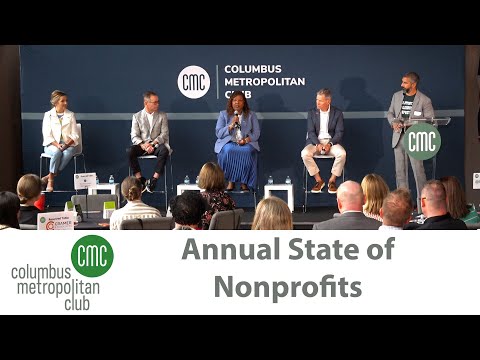
Columbus-area nonprofit leaders at the forum described concrete organizational strategies they are using to respond to funding turbulence, including scenario planning, new board committees to drive fundraising and program improvement, and targeted mergers or partnerships to preserve services.
Joe Gotren, president and CEO of Gladden Community House, said his organization is examining each program’s financial health and has created a new “program and innovation effectiveness committee” to engage board members more deeply: “One of the newer committees that we just launched, is called our grama and innovation effectiveness committee. And it's gonna provide our board members with an opportunity to get even deeper with us.” Gotren said program-by-program scrutiny helps identify where the board’s time and fundraising can be most effective.
Denise Robinson, president and CEO of Alvis, said Alvis has completed seven mergers and acquisitions and is frequently asked whether struggling organizations should merge. She cautioned that financial distress can make an acquisition difficult and stressed preserving the acquired organizations’ identities: “If you're struggling financially, it's kinda hard for someone else to take it on. But number 2 is we gotta keep your passion for your organization... Those 7 mergers and acquisitions, we kept their names because it's important.”
Tom Schmidt, of the Columbus Zoo and the Wilds, pointed to the zoo’s own historic affiliation with the Wilds as an example of a successful long-term partnership that strengthened both institutions by sharing back-office functions and letting mission teams focus on program work.
Panelists said other practical tools in use include multi-scenario contingency planning (high/medium/low impact analyses), fundraising drives that emphasize outcomes, and increased board engagement in fundraising and volunteer mobilization. Julie Fletcher of Crane Group said corporate partners are still committed to giving but remain uncertain about future tax and regulatory changes; Crane has not reduced its philanthropic budget and “the commitment will stay in place.”
Ending: Leaders urged service providers and funders to balance preservation of mission identity with practical consolidations and deeper board engagement; no formal actions were taken during the forum.