Get Full Government Meeting Transcripts, Videos, & Alerts Forever!
Get email alerts on the Public Safety Fire Ems topic
No spam. Unsubscribe anytime.
Fire chief reports record call volume, new prehospital blood program and staffing pressures
Summary
Wauwatosa Fire Chief presented the 2024 annual report: calls exceeded 10,000 with EMS making up 60%, the department became first in Wisconsin to carry whole blood on an ambulance, the department faces recruitment/retention and budget constraints, and a consolidation study with West Allis will report in July.
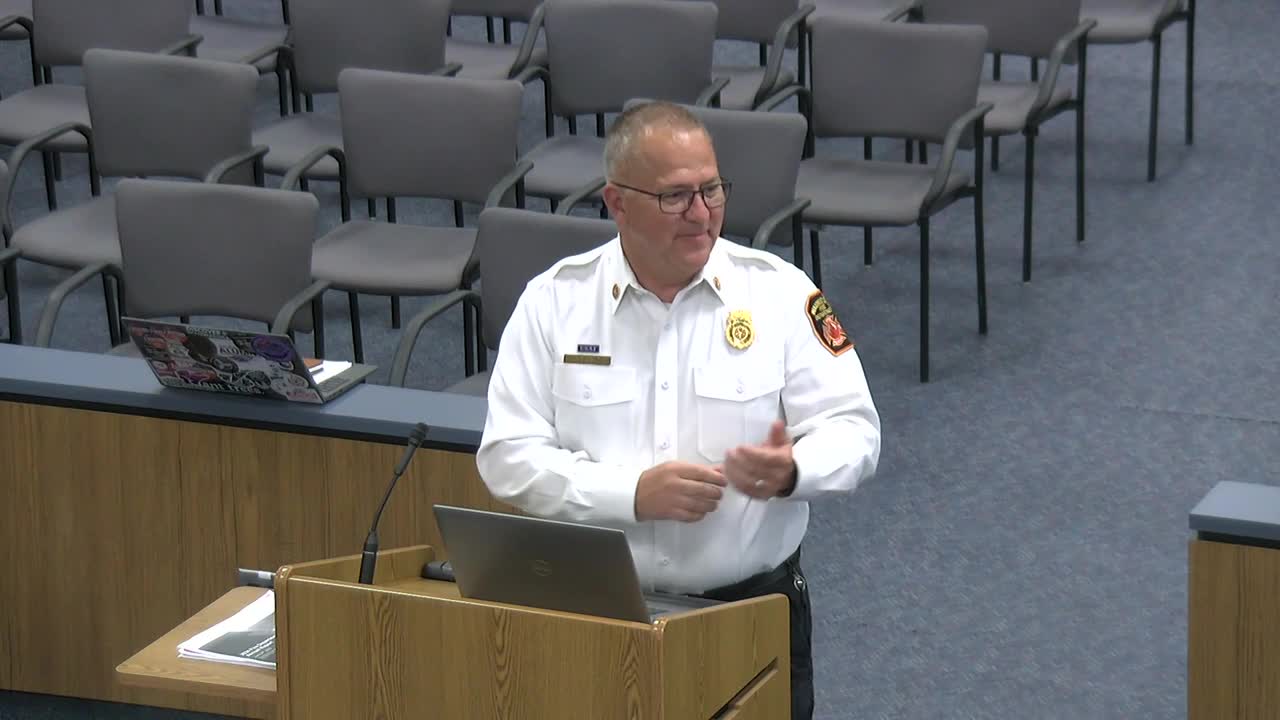
Wauwatosa Fire Chief presented the department's 2024 highlights and 2025 challenges, reporting that the department ran more than 10,000 calls last year, about 60% of which were medical calls.
Chief summarized three service areas: all-hazards response (fire and EMS), community risk reduction (inspections, plan review and public education) and emergency management. The department reported 2,004 fire-related calls in 2024 (including structure and vehicle incidents and smoke reports) and a rising overall call volume trend compared with earlier decades.
A signature medical initiative: Wauwatosa became the first fire department in Wisconsin to carry whole blood prehospital. The chief said the program was implemented using grant support and partnerships with area medical centers and a regional blood center; within weeks the department had administered whole blood on a call. The chief said the program is expanding regionally to other ambulance units.
Workforce and budget issues: the chief said recruitment and retention have become more challenging, with fewer applicants than several years ago (84 applicants for a recent multi-agency hiring; 58 met minimum requirements and 11 reached interview stage). The department hired 12 firefighters in 2024 but lost six retirees that year, totaling roughly 170 years of experience. The department is continuing paramedic training for internal staff (about $20,000 per student) and has two paramedic students scheduled for 2026 with potential training-location constraints.
Operational pressures have led to intermittent temporary shutdowns of apparatus in 2025; the chief said the department had to reduce apparatus availability for seven days so far this year because of staffing levels and that further reductions could occur if budget pressures continue. The department is negotiating a successor collective-bargaining agreement after the union withdrew from a tentative agreement; the chief said binding arbitration may be necessary.
Other items: the department participated in planning and operations for large events such as the Republican National Convention and continues a consolidation study with West Allis; consultants will deliver a detailed consolidation report mid-to-late July and staff expect council review in September. The chief also noted administrative staffing constraints and asked the council to consider that capacity in budget deliberations.
Why it matters: Rising call volumes, intermittent apparatus shortages and ongoing bargaining negotiations have operational implications for emergency response and budget planning. The new whole-blood program could improve trauma outcomes, and the consolidation study may recommend structural changes.
What happens next: The department will continue recruitment and paramedic training, return consolidation findings when available, and bring budget and staffing needs to the 2026 budget process.