Get Full Government Meeting Transcripts, Videos, & Alerts Forever!
Get email alerts on the Traffic Calming topic
No spam. Unsubscribe anytime.
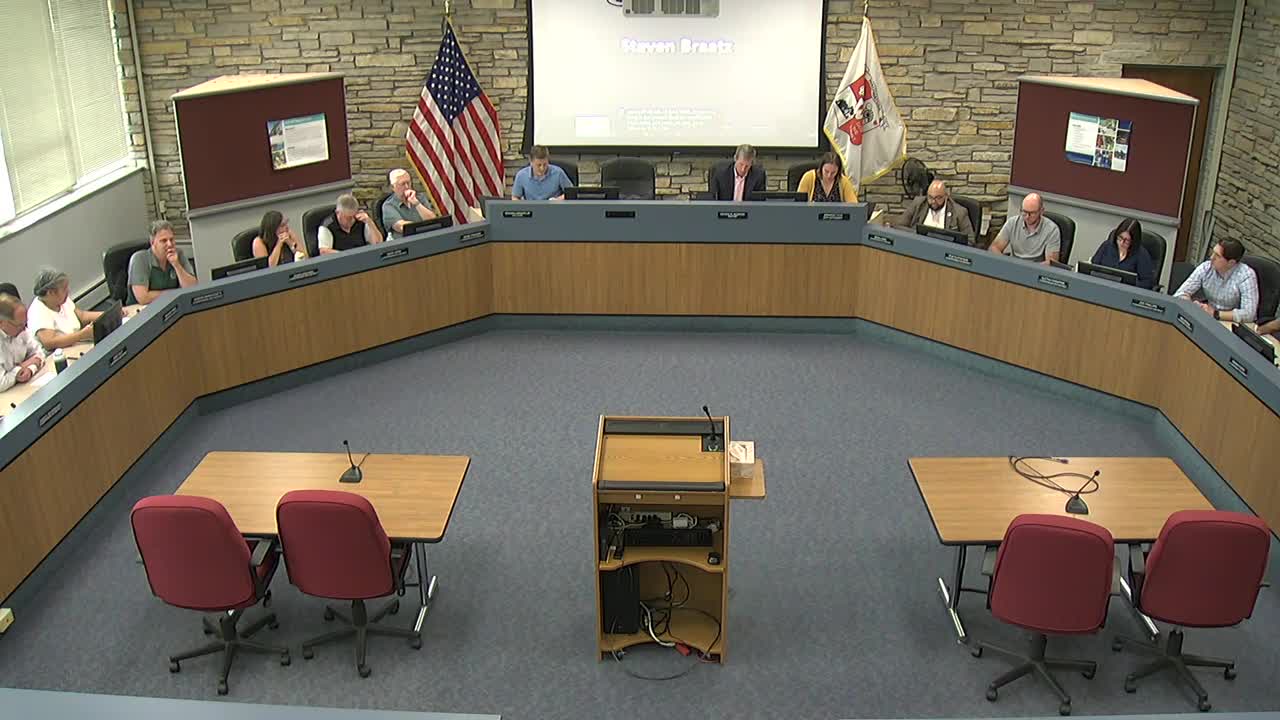
Council adopts Neighborhood Traffic Calming Program after lengthy debate on temporary plastic devices
Summary
The Common Council approved data-driven Neighborhood Traffic Calming Program guidelines funded by the vehicle-registration fee; an amendment to limit temporary plastic traffic-calming devices to one year failed 2-13, and the main item passed 13-0-2.
The Wauwatosa Common Council voted to adopt Neighborhood Traffic Calming Program guidelines intended to prioritize traffic-calming projects across the city using data-driven criteria. The council's approval follows detailed committee work and more than an hour of discussion at tonight's meeting about trial devices, permanent solutions, neighborhood aesthetics and funding.
City engineering staff described the program as a way to prioritize locations and projects using measured criteria such as vehicle speeds, crash rates, traffic volumes, proximity to schools, and Greenway routes. Staff said the guidelines are funded in part by the city's vehicle-registration fee and were developed to produce a ranked list of candidate projects for future capital funding.
Council members broadly voiced support for the data-driven approach and for prioritizing pedestrian and child safety, but voices diverged over use of temporary plastic devices (for example, pin-down speed tables or plastic bollards) that are bolted to pavement. Alder Wilkie offered an amendment limiting use of plastic traffic-calming infrastructure to no more than one year. After discussion, the roll-call vote on the amendment failed, 2 in favor (Dolan and Wilkie) and 13 opposed. The council then approved the Neighborhood Traffic Calming Program guidelines on a roll-call of 13 yes, 0 no, and 2 present.
Staff and council also discussed the intended temporary-versus-permanent role of small devices: engineers said temporary measures may be used while waiting for capital projects, that maintenance and local conditions will shape the choice of device, and that temporary devices can be removed to test behavioral change. Several councilmembers urged flexibility in design depending on whether a location is a school area, a residential neighborhood or a commercial corridor; some members stressed the need to avoid low-quality plastic solutions that degrade in winter and recommend more durable interim options or quicker moves to permanent capital work.
Why it matters: The guideline adoption establishes how Wauwatosa will prioritize and test traffic-calming investments citywide, directs vehicle-registration fee spending and shapes how soon and in what form safety interventions appear in neighborhoods. The failed amendment leaves open the possibility that temporary plastic devices may be used for more than a year in particular circumstances, subject to staff judgment and future funding timelines.
What to expect: Staff said they will compile the prioritized project list and recommend specific candidates for capital budgeting and implementation; some locations will be deployed as interim measures pending permanent construction.