Get Full Government Meeting Transcripts, Videos, & Alerts Forever!
Get email alerts on the Utilities Electricity topic
No spam. Unsubscribe anytime.
El Paso council unanimously denies El Paso Electric rate filing, authorizes settlement talks
Summary
The City Council voted 9-0 to deny El Paso Electric’s full rate request and directed city staff to negotiate potential settlements with the utility and intervenors. The disputed filing sought roughly $93 million in new annual revenue and proposed changes that would shift more costs to residential customers.
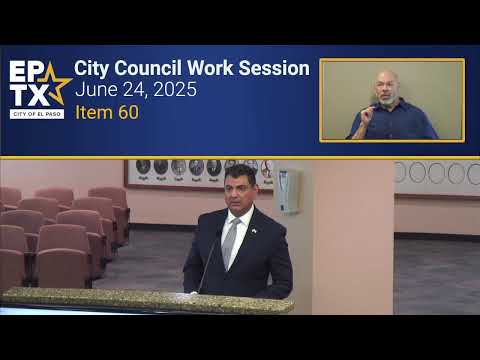
The El Paso City Council voted unanimously Wednesday to deny El Paso Electric’s (EPE) January 2025 general rate filing as submitted and authorized the city manager and city attorney to enter settlement negotiations with EPE and other intervening parties.
The council’s action came after a three‑hour public hearing that included a legal recommendation from the city attorney’s utility regulation team and a technical presentation by EPE staff and witnesses. Assistant City Attorney Matt Marcus told the council, “the recommendation right now at this stage of this stage of the process ... is to deny the amount of the request and the rate design proposals, as currently filed.”
Why it matters: EPE’s filing proposed about $93 million in additional annual revenue and, as presented by company witnesses, would raise the average residential bill by about $22 per month (roughly 23% on the example bills EPE provided). The filing also included company requests to increase the customer monthly charge, change how distributed solar customers are billed and adjust the utility’s return on equity. Council members and members of the public said the proposed changes would have broad affordability implications for households and institutions in the El Paso region.
What EPE said: Daniel Perez, an El Paso Electric spokesman, and the utility’s rate witnesses defended the filing as necessary to recover investments and maintain system reliability. EPE’s Strategic Rate Case Director Jennifer Borden summarized the company’s position: “the revenue requirement is the total revenue that we’re required to collect in order to cover the cost to serve customers, and also to earn a reasonable return on our investment.” Senior regulatory witness George Novella said the company was proposing tariff structure changes intended to better target peak usage and signaled pilots for time‑of‑use and peak‑time rebate programs.
City concerns and process: City staff and council members pressed EPE on several technical points: the utility’s proposed 10.7% return on equity, cost overruns on the Newman 6 generating unit, the size of the company’s capital additions (the company told council it had invested about $1.55 billion since the prior rate case), and the proposed shift of costs onto residential ratepayers and rooftop solar customers. Council members repeatedly noted that the council’s vote was an initial jurisdictional determination under Texas law and would not by itself decide final rates — any final decision lies with the Public Utility Commission of Texas (PUCT). Marcus and others explained that a denial of the application as filed gives the city authority to negotiate potential settlements with the utility and other intervenors before the PUCT hearing process concludes.
Public and stakeholder input: Dozens of intervenors and local stakeholders participated in the PUCT docket; representatives of large industrial customers, neighborhood groups and local officials were present. A representative from Marathon’s local refinery said the company sought full scrutiny of EPE’s request because industrial customers already face a competitive disadvantage. Several council members urged EPE to expand outreach and to work with the city to explain programs available to low‑income customers.
Council action and next steps: Council voted 9–0 to deny EPE’s filing “as filed” and to authorize city staff and counsel to enter settlement negotiations with the utility and interveners. Marcus and city staff said negotiations would be coordinated with the city’s expert witnesses and could affect the positions presented to the PUCT ahead of the administrative law judge’s hearing scheduled for August and the PUCT’s expected final decision later in the year.
Ending: Because the case proceeds at the state level under the Public Utility Commission of Texas (PUCT docket No. 57568), the city’s denial is an early procedural measure intended to preserve the city’s ability to seek better terms for customers through settlement or litigation. City staff and EPE agreed to continue technical exchanges as negotiations proceed.