Get Full Government Meeting Transcripts, Videos, & Alerts Forever!
Get email alerts on the County Fair Budget topic
No spam. Unsubscribe anytime.
Valley County workshop clarifies fairboard budget timing, levy uses and infrastructure responsibilities
Summary
At a Valley County commissioners workshop, county officials and fair board members reviewed statutory budget deadlines, discussed how levy dollars may be used for event costs versus infrastructure, and identified outstanding purchases and a master‑planning timeline for the fairgrounds.
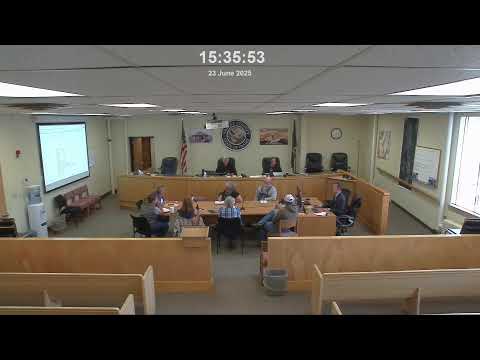
Valley County commissioners and members of the Valley County Fair Board met in a workshop to review the fair and rodeo finances and to clarify roles, allowable uses of levy funds and timing for the FY2026 budget submission. County staff said the fair board must file budget information early in the year so the county can set levy rates.
County staff read a provision of state/county law requiring the fair board to prepare an annual budget in February and certify the amount to be raised by the county for fair purposes. The staff member said the purpose of the statutory timeline is to ensure the board (the Board of County Commissioners) can determine levy adjustments in time for the fiscal year.
The conversation centered on three practical questions: how much cash the fair board holds, how much the county levies for fair purposes, and what levy dollars may be spent on. Fair Board members reported a bank carryover (described during the meeting as about $130,000) and said the board anticipated roughly $51,000 in gate and event revenues for the coming year. County staff said the current county levy contribution for the fair is $70,000. Staff and commissioners explained that, under the statute reviewed at the workshop, the first use of carryover and levy funds is to fund the next year’s event; remaining levy dollars may be used for capital or maintenance on county‑owned fairground property.
Fair board members and commissioners discussed several outstanding purchases and projects the board has proposed or already made: new arena lights (planned), a water truck (deferred/"make do" this year), an arena groomer that is large relative to the current tractor, additional bleachers (rental options discussed), and restrooms/new building work stated as completed. Fair board members reported buying a new stage and new locks; meeting participants identified some uncertainty in the budget spreadsheet about whether figures were carryover or revenue vs. expense and asked for clearer bookkeeping.
On equipment ownership, commissioners and county staff said property (land, grandstands, fencing and similar fixed infrastructure) is county property and would typically be maintained with levy dollars; equipment paid for out of gate receipts is treated differently depending on ownership agreements. Several participants raised the practical problem of purchasing a new cab tractor: a quoted trade‑in price left an additional $35,000 due, and the cab tractor would not fit the building that currently houses the existing tractor until other buildings or space are available.
Fair board members and commissioners agreed there is a need for clearer bookkeeping and for compliance with the February budget timeline. County staff and fair board members agreed to hold a budget workshop in February to finalize FY2027 planning and to use the remainder of the year to complete a master plan for new fairgrounds. Members of the planning team said the master plan is expected to be completed by the end of the year and implementation (capital campaigns, investor outreach, possible new grounds) could take two to three years.
No formal motions or votes were recorded during this workshop; the meeting was used for discussion, clarification of legal and financial responsibilities, and to set next steps.
Ending: Commissioners thanked fair board members for their work and emphasized the need for a February budgeting cycle and improved bookkeeping to ensure levy and carryover funds are applied in accordance with statute and local priorities.