Get Full Government Meeting Transcripts, Videos, & Alerts Forever!
Get email alerts on the Government Efficiency topic
No spam. Unsubscribe anytime.
Consultant says Leesburg is 'professionally managed' in government efficiency review
Summary
A consultant retained for an annexation process told the Leesburg Town Council that an independent review by the Virginia Commission on Local Government found the town fiscally stable, well‑managed and following many best practices; councilors asked follow‑up questions but took no formal action.
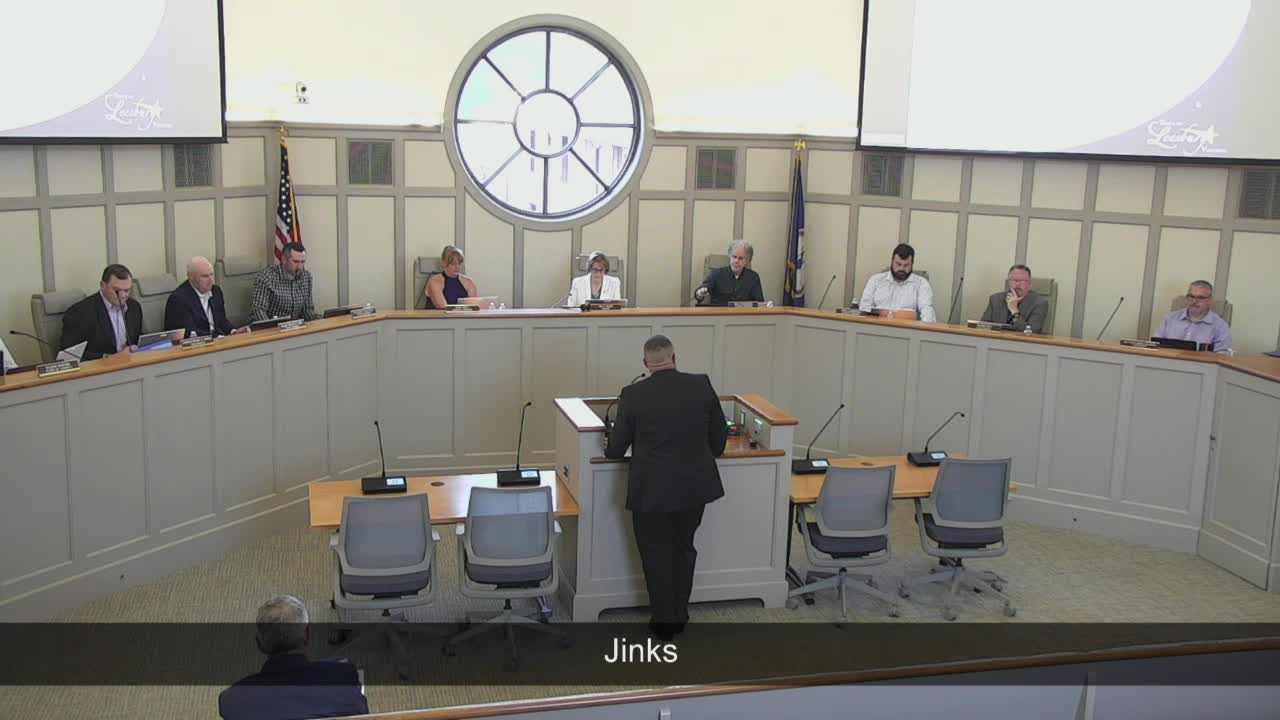
Consultant Mark Jinx told the Leesburg Town Council that an independent government‑efficiency review prepared for the town’s annexation filings found Leesburg to be “professionally managed” with stable leadership and strong financial practices.
The report, acquired by the Virginia Commission on Local Government as part of the annexation review, evaluated the town’s overall systems, policies and fiscal measures and compared per‑capita costs and other indicators to peer Northern Virginia towns. The consultant said the review concluded Leesburg fares well on measures such as cost per capita, long‑range planning and formal financial policies.
Jinx, who has served as a deputy city manager and city manager in the region, said the review was not a program‑level audit but a jurisdictional assessment and drew on interviews with senior departmental leadership. “You have strategies, systems and structures in place,” Jinx told the council, adding the town shows “substantial evidence basis of efficiency, effectiveness, and capability.”
The presentation noted several specific strengths: a six‑year capital improvement program, utilities planning, written financial policies with measurable targets, regular performance measures and long‑tenured department heads. Jinx said Leesburg’s bond disclosures meet market standards and reported that the town has received multiple AAA bond ratings, with one agency placing Leesburg at the upper end of AAA range.
The consultant also flagged a timing uncertainty noted in the written report: changes in employee compensation tied to recent developments at the General Assembly on collective bargaining. The report text cited that “town employee compensation will likely need to be increased in real terms due to market pressures and the likelihood of collective bargaining agreements,” language Jinx said reflected the report’s timing and the then‑unknown contract impacts.
Councilors asked clarifying questions about items in the report, including a capital‑program chart and the comparative tax‑rate analysis. No formal motions or votes were recorded on the study; the report was attached to the meeting agenda for council review.
The presentation came as part of a follow‑up agenda item linked to the town’s annexation process, where the consultant’s “good government” analysis had been used in filings. A town official noted the county did not challenge that element during the annexation proceedings.