Get Full Government Meeting Transcripts, Videos, & Alerts Forever!
Get email alerts on the Infrastructure Roads topic
No spam. Unsubscribe anytime.
Caltrans: temporary traffic controls, slope repairs and retaining‑wall work underway; utility vaults and conduit to follow
Summary
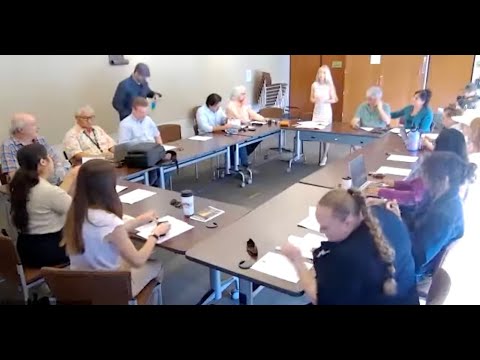
Caltrans project staff and utility contractors briefed the Megaton Council on the status of repairs to Topanga Canyon Boulevard and associated utility work.
Caltrans project staff and utility contractors briefed the Megaton Council on the status of repairs to Topanga Canyon Boulevard and associated utility work.
Caltrans spokesperson Katie (project manager for the Trinity Boulevard project) said crews have installed temporary debris‑flow barriers at multiple sites and are installing geosynthetic reinforcement (GRE) at five locations to stabilize slopes. Design work is nearly complete for two retaining walls near mile markers about 2.5 and 2.7; Caltrans said it is selecting drillers and procuring steel for soldier‑pile/ground‑anchor walls at those locations and intends the walls to be permanent features that vegetate over time.
Katie said a temporary traffic signal at the intersection with Pacific Coast Highway (PCH) has been installed and will remain until final restriping at the bottom of the corridor is completed. Contractors from Southern California Edison (SCE) and telecom firms are coordinating vault and conduit work: SCE’s John Abbott said crews aim to complete vault installation first, with trenching and conduit installation to follow; he estimated vaults could take about a month to set and trenching another month to month‑and‑a‑half depending on subsurface conditions.
Abbott and Caltrans staff said the utilities’ target completion timeline for on‑site electrical work was December 31, with a contingency window through March for weather or red‑flag restrictions; paving by Caltrans is anticipated to follow once utility and preparatory work are complete. Officials acknowledged traffic delays during single‑lane operations and said they were coordinating with contractors to prioritize peak flow when feasible and to limit typical lane‑closure delay to roughly five to seven minutes where possible.
Residents asked about shoulder width, gravel shoulders and how the design would affect emergency vehicle access; Caltrans staff said decisions on shoulder width reflect multiple design and safety constraints and they will take local feedback to the design team. A number of community members praised Caltrans and partner agencies for efforts to protect trees and minimize environmental damage when designing GRE solutions and pile placement.
Ending: Caltrans urged residents to report recurring traffic problems to the project team so patterns can be documented; utility and Caltrans staff said work will continue in phases with timelines subject to contractor selection, weather and red‑flag days.