Get Full Government Meeting Transcripts, Videos, & Alerts Forever!
Get email alerts on the Tax Rate Election topic
No spam. Unsubscribe anytime.
Trustees debate timing of voter-approval tax-rate election; many favor completing efficiency review and budget work first
Summary
Trustees debated whether to pursue a voter-approval tax-rate election (VADER) but stopped short of setting a date, directing administration to commission an efficiency review and provide budget and consolidation scenarios first.
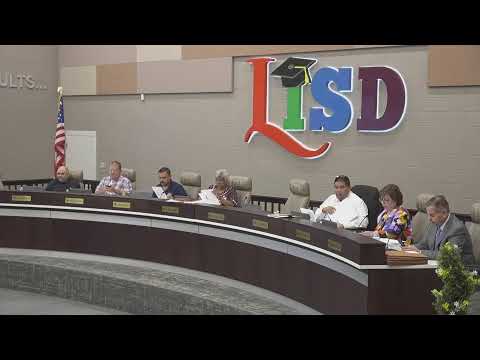
At the June 5 meeting trustees considered whether to pursue a voter‑approval tax‑rate election (VADER) to access additional pennies on the tax rate. Miss Ayala briefed the board on the process and timetable for an efficiency audit that must be posted for an election: "VADER stands for voter approval tax rate election. And so what I'm looking for here is direction from the trustees... I have to contract the auditor to conduct the efficiency audit by June 16 so that they'll have, about 4 weeks to prepare and then start their work in July 16 and have that efficiency audit available for, the voters to use as a tool when making their decision."
Trustees split on timing. Several members, including board president Juan Ramirez Jr., said they want administration to first complete internal cost-savings work (consolidations, program reviews, budget adjustments) and come back with concrete recommendations before placing a tax-rate question before voters. Trustee Doctor Martinez and others said a November election could be preferable to earn broader turnout and make a clearer case to voters if the board decides to proceed.
Trustees asked administration for a series of follow-ups before moving to an election: an independent efficiency audit cost estimate and timeline, a list of specific consolidation and cost‑cutting options with projected savings (including scenario modeling for consolidating campuses or changing summer-school delivery), and an updated bottom-line deficit projection that incorporates House-bill allotments, projected enrollment/ADA impacts, and health-plan liabilities. Trustees also requested the district's unassigned fund balance be included in the materials for the next workshop.
No formal board vote to set an election date was recorded in the meeting transcript. Several trustees said they would prefer to pursue internal recommendations and a completed efficiency audit before deciding on timing and on how many ‘‘pennies' to ask voters to approve.