Get Full Government Meeting Transcripts, Videos, & Alerts Forever!
Get email alerts on the Housing Affordability topic
No spam. Unsubscribe anytime.
Housing Authority of Snohomish County briefs Lynnwood council on financing, pipeline and local project plans
Summary
Housing Authority of Snohomish County leaders explained federal and state financing tools, described barriers that raise construction costs, and outlined a planned Lynnwood project while answering council questions about funding, tenant relocation and timeline.
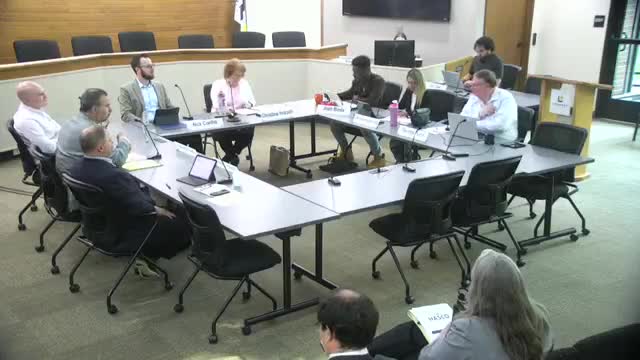
Lynnwood — The Housing Authority of Snohomish County (HASCO) outlined how federal tax credits, state gap funding and private investors combine to finance most U.S. affordable housing, described why construction costs are high, and reviewed plans for a Lynnwood project during a City Council work session on June 18.
Laurie Olsen, incoming chief executive officer of the Housing Authority of Snohomish County, told council members that the Low-Income Housing Tax Credit program (LIHTC) and related financing remain central to producing affordable units. "The Low Income Housing Tax Credit program is actually a program administered by Treasury and the IRS," Olsen said, describing how banks and other investors use tax credits as equity to make deals feasible.
Olsen and Chris Collier, program manager for the Alliance for Housing Affordability and soon-to-be director of government relations at HASCO, walked council through the long history of funding mechanisms — including the Community Reinvestment Act, Community Development Block Grant and HOME programs — and the practical effects of that layered finance on local projects. Olsen said the state capital budget recently included roughly $600 million in gap funding for affordable housing, with a per-project cap of about $5 million from that source. HASCO has penciled in roughly $12 million of its own funds to help close the gap on the Lynnwood site the authority plans to develop.
The agency said it expects the Lynnwood project to be roughly 120 units and to target a mix of seniors and families across several Area Median Income (AMI) bands. Olsen estimated per-unit new-construction costs for Lynnwood at about $550,000 to $650,000. "It is not an insignificant number of money in order to build affordable housing," she said, contrasting that with unit costs in higher-cost markets such as San Francisco.
Council members pressed HASCO for specifics. Councilmember Hurst asked whether the authority would apply for the state housing trust fund award this fall; Olsen confirmed HASCO planned to seek an approximate $5 million award and noted HASCO had committed its own gap money. Councilmember Decker pressed for details about earlier redevelopment projects in Lynnwood and asked how many displaced tenants were able to return; Olsen said she had been in the job six months and would follow up with the precise relocation numbers for the Novo redevelopments.
On financing mechanics, Olsen described the relationship between developers, banks and investors: investors typically structure tax-credit equity and require projects to meet rigid underwriting and timing criteria. "One way banks and investors can get their Community Reinvestment Act credit is to invest in affordable housing," she said. That structure, she said, means investors are usually the majority owners for a long compliance period and care about a project's readiness, location and lease-up speed.
Olsen and Collier also discussed policy options, including zoning, regulatory streamlining and how cities can prioritize affordable housing to improve project viability. Collier said the sector lacks a single national housing strategy. "We don't have a housing leadership act going back to Congress," he said, arguing that current policy is layered and reactive rather than directed by a single long-term framework.
Several council members asked how Lynnwood could help. Olsen recommended that the city designate priorities and align local tools with state and county partners to improve competitiveness for larger financing sources such as the Housing Finance Commission. She suggested the council provide clear local commitments — for example letters of support and clarity on priorities and site readiness — that state or regional funders look for when deciding major awards.
There were clarifying exchanges about private-sector investments and grants. Olsen and Collier described increasing social-impact capital from corporate actors and said portions of those investments have been grants rather than loans; they cautioned, however, that many corporate investments are structured as loans that must be repaid and therefore do not fully substitute for gap grant funding.
No formal vote or council action was taken during the presentation. Council members asked HASCO to return with more specific, Lynnwood-focused recommendations and for follow-up information on relocation outcomes from prior HASCO redevelopment projects. HASCO said it plans to apply for state gap funding this fall and will continue coordinating with the city on site and timing needs.
The session closed with council appreciation for the detailed briefing and an acknowledgment that the city and the housing authority will need to coordinate to shape any future local commitments or policy changes that would support production and preservation of affordable units.