Get Full Government Meeting Transcripts, Videos, & Alerts Forever!
Get email alerts on the Board Procedures topic
No spam. Unsubscribe anytime.
Salt Lake School District board debates meeting norms, assigns handbook review and votes to enter closed session
Summary
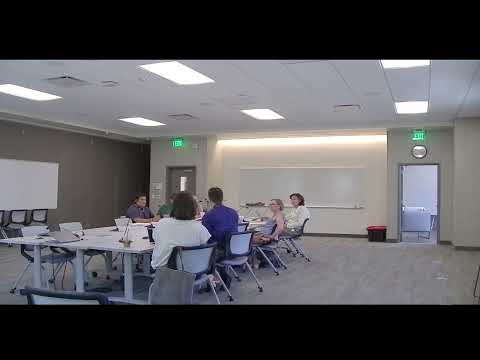
At a study session, Salt Lake School District Board President Nate Salazar led a detailed conversation on proposed board norms and meeting procedures and the board later voted to enter a closed session to discuss personnel and contract negotiations.
At a study session, Salt Lake School District Board President Nate Salazar led a detailed conversation on proposed board norms and meeting procedures and the board later voted to enter a closed session to discuss personnel and contract negotiations.
The discussion focused on 12 suggested norms from recent training and staff and board feedback, with members asking the district's handbook and policy committee to review and reconcile any changes with existing legal requirements and the district handbook. "My concern is that that doesn't follow parliamentary procedure," Ashley Anderson said, arguing members should not constrain motions that comply with Robert's Rules of Order. "It would be different to say, you know, someone has a preference for that or letting people know what their preference is. But, ultimately, you get to vote no on that if you don't like it." Board members agreed the handbook committee should recommend language that accommodates both parliamentary procedure and the board's preference for individual consideration of action items.
Why it matters: Board norms and agenda rules affect how the public sees transparency and how thoroughly items are vetted before a vote. Several members said clearer written guidance and routine committee communications would reduce rushed decisions and confusion about whether an item on the agenda is for information, discussion, or immediate action.
Key points discussed
- Single-topic motions and consent: A board member proposed that "each motion should be limited to one idea or issue" (except the consent agenda) so items receive focused attention. Several members said the practice is desirable; others cautioned it may conflict with parliamentary procedure and suggested the handbook committee reconcile the inconsistency.
- Report vs. discussion placement: Members recommended that items with "no intention or need for action" be placed on the report agenda rather than the discussion agenda to set clearer expectations that no motion is expected at that meeting. Amanda Longwell said cover memos should explicitly state when staff do not expect action, while allowing the board to move an item to action if members feel prepared.
- Reading cadence and announcements: Board members discussed reinstating a baseline multi-reading approach for substantive items (often three readings), while preserving flexibility for urgent matters. "The baseline is three," one participant said, while others noted some items already follow different cycles driven by committee work.
- Leadership and committee communications: Ashley Anderson urged that notes or bullet-point summaries from leadership meetings be shared with the full board as a "reciprocal courtesy," and members asked the policy committee and staff to ensure committee agendas and review notices are circulated to all board members (an existing practice members said had lapsed in recent months).
- Agenda packet timing: Board members agreed to attempt moving public release of the board packet one day earlier, to Wednesday rather than the current practice of Thursday before a Tuesday meeting, to give members more time to review exhibits and respond to requests.
- Use of study sessions: Members discussed using study sessions for cabinet presentations and deeper discussion so business meetings can focus on action and clarifying questions. The board generally endorsed greater use of study sessions for substantive review before votes.
- "Three-to-agree" threshold and agenda requests: The board asked the handbook committee to evaluate a proposal heard in recent USBA (Utah School Boards Association) training that would require three members to agree before a requested agenda item is added or before members request superintendent action. The committee will review both interpretations of the concept.
- Attendance norms and evaluation: Members raised expectations about respect and responsibility tied to attendance. The board requested legal counsel and the handbook committee to clarify allowed responses and any related language for the evaluation criteria.
Decisions and directions
- Handbook/policy committee review: The board tasked the handbook and policy committee to review the suggested norms and reconcile them with Robert's Rules of Order, district handbook provisions and legal constraints; staff and district legal counsel were asked to participate.
- Committee communication practice: The board asked policy and committee chairs (and staff contact Jillian, compliance) to restore routine email notices and bullet summaries of policy and committee meetings to all board members.
- Agenda timing pilot: Members agreed to try a Wednesday packet release goal before the next meeting and to bring any required handbook language to the handbook committee.
- Board evaluation timeline: The board discussed the evaluation timeline presented by staff. Richard (consultant) is expected to provide the evaluation tool to board members on July 19 or 20; completed individual evaluations were set to be due July 29, and Richard is prepared to present results on August 2, pending any timing adjustments.
Formal action: vote to enter closed session
A motion to enter closed session to discuss the character and competence of an individual and contract negotiations was made and seconded; a substitute motion referencing the permissible purposes in Utah law was also offered. The board then took a roll-call vote and approved entering closed session. Recorded votes were: Amanda Longwell, yes; Ashley Anderson, yes; Nate Salazar, yes; Bryce Williams, yes; Charlotte Jefferson, yes; Brian Jensen, yes. The board recessed into closed session for the stated permissible purposes under Utah law.
What comes next
Handbook and policy committee members will draft proposed handbook or policy language and return recommendations to the full board. Staff will work to meet the new packet timing goal and circulate committee notices and bullet updates as requested. The consultant-led evaluation process will proceed on the timetable discussed.
Ending
Board members characterized the study session as a substantive effort to restore consistent meeting norms and improve transparency and efficiency. The public business meeting was scheduled to resume after the closed session.