Get AI Briefings, Transcripts & Alerts on Local & National Government Meetings — Forever.
Hospitals and county present 2025 community health needs assessment; health officials urge a community health improvement plan
Summary
Ascension Borges Hospital and partners presented a 2025 Community Health Needs Assessment (CHNA) for Kalamazoo County identifying six significant needs. Health officials urged formation of a Community Health Improvement Plan (CHIP) and discussed funding, staffing and data gaps, especially for seniors.
Representatives from Ascension Michigan and Kalamazoo County Health & Community Services presented the county's 2025 Community Health Needs Assessment (CHNA) and described next steps toward an implementation strategy or a broader Community Health Improvement Plan (CHIP).
Jody Rolfe, community benefit manager for Ascension Michigan, said the CHNA is required under the Affordable Care Act and that Ascension Borges Hospital and partners collaborated on the county report. Rolfe said the project used a mix of secondary indicators and primary input (focus groups, stakeholder interviews and a community survey) and that community input was weighted heavily when prioritizing needs.
Rolfe identified six significant needs (presented in alphabetical order): behavioral health; economic stability; health care access and quality; housing and homelessness; sexually transmitted infections; and systemic racism and racial disparities. She said the full report will be publicly posted no later than June 30 and that hospitals will develop implementation strategies identifying which needs they will act on.
James Rutherford, Kalamazoo County health officer director, said the community benefits from coordinated cycles of assessment and urged consideration of a CHIP as the next step. Rutherford described a CHIP as a long-term, multi-stakeholder plan that assigns ownership, sets goals, and tracks progress. He cautioned that creating and sustaining a CHIP requires staffing and funding commitments and suggested the local health department commonly serves as the convener while many partners contribute resources.
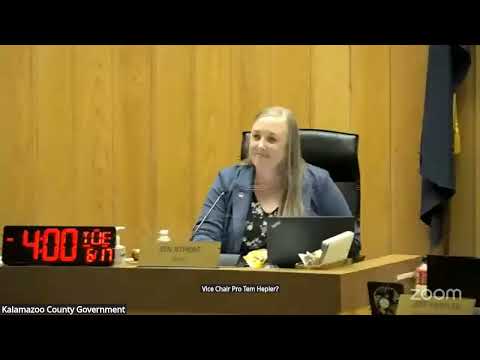
Commissioners asked several practical questions during the presentation. Vice Chair Pro Tem Hepler and others raised whether hospitals would help fund staffing for a CHIP; Rolfe said funding approaches differ by community and partners typically contribute. Commissioners also noted gaps in primary data from seniors; Ascension said it plans to pursue additional outreach and that Bronson Hospital (on a different IRS cycle) may collect supplemental data for later addenda.
Rutherford and Rolfe emphasized the need to move from assessment to implementation if the community wants the CHNA to drive measurable change. The health department and hospital partners will return with implementation planning and potential roles for county participation.