Get Full Government Meeting Transcripts, Videos, & Alerts Forever!
Get email alerts on the Animal Services topic
No spam. Unsubscribe anytime.
Indio council approves renewed animal services agreement with reporting and review requirements
Summary
After hours of questions about staffing and performance, the City Council authorized the city manager to execute a revised three‑year agreement with Riverside County Animal Services, with direction to prioritize a one‑year review, regular performance reports and better data sharing.
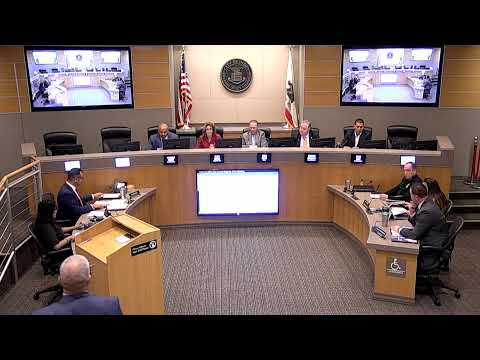
The Indio City Council on June 18 approved a renewed agreement with Riverside County for animal control field and shelter services, while directing staff to secure more frequent performance reporting and a shorter review period.
The council voted 5-0 to authorize the city manager to execute the contract in a form approved by the city attorney and asked staff to return with more frequent performance data, a publicly available dashboard, and a plan for a one‑year evaluation of service levels and costs. Assistant City Manager Jonathan Nicks told the council the county’s proposal would phase in added shelter staff across the region and would raise Indio’s proportional share of that countywide increase; the city’s share of the proposed county shelter staffing increase was listed as $351,841 for the total program. Nicks said the combined current cost for Indio’s shelter and field services was roughly $1.2 million and would rise over the next three fiscal years under the county proposal to roughly $1.7 million by year three if fully implemented.
Why it matters: Indio is one of several Coachella Valley cities that contract with the county for animal care and sheltering. Council members and residents pressed county staff for evidence that contracted animal control officers are present in the city as billed, and for clearer monthly reports so council and the public can judge whether the increased cost yields measurable service improvements.
Council and staff exchange: Assistant City Manager Jonathan Nicks and Riverside County’s new director of animal care, Mary Martin, answered detailed questions about staffing, weekend coverage and the proposed three‑year cost schedule. Martin said the county would work to improve communication and reporting, and that her office plans a public dashboard and more regular meetings with contract cities: “We absolutely want to do better with our communication,” she said, adding that the county will provide more timely intake and response metrics.
Council members repeatedly requested proof of service levels in the city. Several council members and members of the public described occasions when animal calls appeared not to have been handled promptly; county staff responded that officers respond to calls and that some days they are responding continuously to high call volumes. Jonathan Nicks reported county data showing about 56 weekend responses per month on average for the service area, a figure he said the city requested to understand weekend coverage options.
Public commenters and nonprofits: Michael Phibbs Russell, a resident and member of the County Animal Campus Commission, urged clearer contract language about behavior and medical care and a uniform timeframe for initial animal assessments. Kim Hardy of Loving All Animals and other local nonprofit partners said she has seen improvements and urged patience, while also volunteering nonprofit support such as spay/neuter clinics and foster recruitment.
Council direction and oversight: The council authorized the city manager to finalize the agreement but asked staff to: (1) negotiate a one‑year initial term with options for extension rather than an automatic multiyear lock‑in; (2) require monthly or quarterly operational reports (intakes, holds, transfers, outcomes, and weekend responses) and a publicly accessible dashboard; (3) continue to press the county for evidence that three full‑time officers are serving Indio as contracted and to identify any mutual‑aid pulls that remove officers from city coverage; and (4) continue working with nonprofit partners to expand spay/neuter, foster and transfer capacity to lower shelter intake.
What the contract covers: The proposed county changes include adding staff to shelter adoption and foster teams (countywide cost about $4.5 million) and modest increases to field services. Nicks said the county proposed phased increases to Indio’s shelter share (from about $399,000 in FY24-25 to higher amounts over subsequent years) and a modest cost increase for animal control field coverage, depending on whether the city retains seven‑day coverage or moves to a five‑day schedule.
Next steps: Staff will return with contract language that reflects council direction, a timeline and a reporting schedule. The council asked that staff bring an update after about six months of the new agreement’s operation so members can assess whether the increased outlay delivers measurable improvements.
Ending: Council members emphasized both accountability and partnership. The vote authorizes the city manager to sign the agreement as revised, and council members said they expect the county to deliver clearer data so city officials can track outcomes and justify future budget decisions.