Get Full Government Meeting Transcripts, Videos, & Alerts Forever!
Get email alerts on the Administrative Code topic
No spam. Unsubscribe anytime.
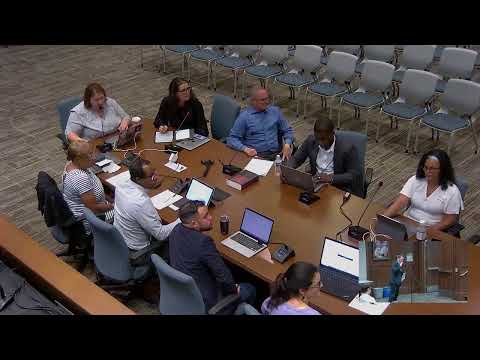
Lancaster reviews draft administrative code under home rule; work sessions and public comment scheduled
Summary
Lancaster City officials on June 17 reviewed the first tranche of a proposed Administrative Code required by the Home Rule Charter, covering budgets, finance, procurement and records retention and opening a public comment period and further work sessions ahead of a tentatively scheduled November vote.
Lancaster City officials on Tuesday reviewed the first set of proposed Administrative Code provisions required by the city’s Home Rule Charter, focusing on budgets, finance and procurement and asking the public and council to submit comments during a two‑week public comment window before further work sessions.
The draft, presented by City Solicitor Barry Hendricker, lays out definitions and policy roadmaps for capital and operating budgets, fund accounting, investment and debt policies, centralized procurement and record retention, and includes new reporting and sustainable procurement language recommended by best‑practice groups.
Hendricker told council that “with home rule, we can do anything not prohibited by law,” and said the draft is intended as a starting place that largely codifies practices already in the city’s ordinances and the Third Class City Code while adding clarifications and some new internal controls.
Why it matters: the Administrative Code will consolidate rules that now live in multiple places, set formal timelines and reporting obligations for budgets and capital planning, and give council written standards for financial management and procurement. Council will hold further non‑legislative work sessions in August and later, and the administration has tentatively scheduled a single legislative vote on the complete code for November.
Key points from the presentation
- Scope and schedule: The packet presented is one of several tranches required by the Home Rule Charter. Hendricker said two of five topics would be covered in the next tranche in August and that the complete Administrative Code is planned for a single vote in November. Council President Begay said public comments may be submitted online via Engage Lancaster, and that each work session is intended for discussion, not legislative action.
- Budget and capital timelines: The draft reproduces charter timeframes for adoption of the annual budget and capital budget and proposes presenting those timeframes in tabular form so council and the public have a roadmap for hearings and readings.
- Funds, accounting and reporting: The draft defines fund types (general fund, special revenue, debt service, capital project, enterprise, internal service and fiduciary) and recommends a modified accrual accounting basis and electronic systems that can differentiate funds and produce regular reports. Hendricker said the Director of Administrative Services should provide quarterly investment reports showing portfolio composition, market and book values, and compliance with applicable law.
- Investments and debt: The code would require the mayor, with council approval, to adopt debt management and investment policies and would require long‑term debt issuances to comply with state law and be approved by ordinance. Tina (Director of Administrative Services) said sections on investment, debt and cash reserves were shaped by best practices from the Government Finance Officers Association and are “not intended to be full policies. They’re intended to, kind of state what the policies should have in them.”
- Procurement changes: The draft codifies a centralized purchasing system and adopts the procurement thresholds and exceptions currently used under the Third Class City Code, including exceptions for professional services and emergency purchases. Hendricker explained the draft adds a narrowly drawn emergency‑purchase exception for urgent repairs that are not part of a formal declaration of emergency (for example, a specialized part needed to stop significant water loss).
- Sustainable procurement and transparency: The code recommends that procurement staff consider environmentally preferable and sustainable procurement options to support Lancaster’s municipal climate action plan, but does not impose an immediate sustainability mandate. The draft also calls for publishing adopted policies on the city website.
- Records retention and Right‑to‑Know compliance: The draft adopts record retention schedules consistent with the Pennsylvania Records Retention Act and affirms compliance with Pennsylvania’s Right‑to‑Know Law for public records requests.
Council questions and public comments
Council members asked how enforcement and oversight would work, including who would ensure compliance with reporting and internal controls. Hendricker said reporting is intended to give council a tool to verify compliance and that council retains remedies, including seeking litigation, if an administration fails to comply with legislative requirements.
Councilor Ahmed asked “how much of this should we leave kind of, not specifically defined? And how much should we…make sure that each individual fund has its own individual account?” Hendricker replied that the draft seeks balance: it sets legislative expectations while leaving detailed policy development to the administration and professionals, with policies to be brought back to council for approval.
Public commenters cited procurement and compensation issues. Alexander King, of the 600 block of North Shippen, asked about the public‑bid threshold and noted that the current Third Class City Code threshold “seems like a pretty small sum” (roughly $23,000 under the existing schedule). A staff response in the meeting said the thresholds mirror the current Third Class City Code and were recommended to protect taxpayer dollars and encourage open competition. Marshall Miller asked how council could propose or secure changes during the review period and was told the four work sessions are intended to build consensus before the legislative readings.
Formal actions
The work session included no legislative votes. At the meeting’s close council received a motion to adjourn; the motion was seconded and approved by voice vote of the members present.
What happens next
Council will continue Administrative Code work sessions in August and hold additional discussion sessions before the administration brings a consolidated ordinance for the full code to the council for first and second readings and a final vote, tentatively in November. The administration invited the public to review materials and submit questions and comments through Engage Lancaster during the two‑week comment periods after meetings.
The presentation and draft text are available on the city’s Engage Lancaster site and council members will receive a JotForm to submit questions to avoid inadvertent quorum issues during the informal comment period.
Ending
No policy changes were adopted at the session; the meeting was a presentation and discussion of the draft code and the process for public and council review. Councilors and staff said the draft is a starting point meant to be revised through dialogue in subsequent meetings before the November legislative vote.