Get Full Government Meeting Transcripts, Videos, & Alerts Forever!
Get email alerts on the Public Health Budget Staffing topic
No spam. Unsubscribe anytime.
Scotland County health staff report dwindling grant revenue, staffing gaps and shrinking one-time Medicaid settlement
Summary
Health department leaders told county officials that lost grant funding, changes in Medicaid settlements and repeated budget cuts have left programs and outreach under strain and staffing short of positions needed to run clinics and mobile outreach.
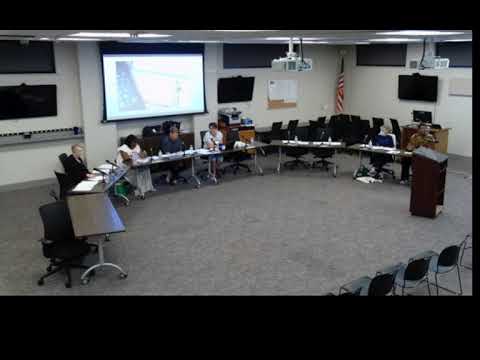
Scotland County health department leaders reported at a recent county meeting that lost grant funding, changes to Medicaid cost-settlement payments and repeated county-directed budget cuts have reduced the department’s operating budget and left multiple clinical and social-work positions vacant.
The health department’s finance and program leads said the county had received a $57,000 Medicaid cost-settlement payment that reflected two years of a 10% holdback the state returns later, and that the shift to Medicaid managed care has reduced future reimbursements. “And that 10%… they give to us 3 years later. And that's where that $57,000 came from,” the staff member who presented the budget explained. The presenter said the department expects smaller or no similar settlements going forward as managed care replaces the old state Medicaid cost-settlement process.
That loss of one-time revenue arrived on top of two other funding reductions the department flagged: the expiration of an ARPA grant and about $250,000 in other grant funding that is not being renewed. The department’s finance presenter described an additional county request to find $325,000 in cuts for the upcoming fiscal year, on top of about $359,000 that had been cut or absorbed in the prior year. “So this is actually asking you to cut $700,000 from a budget… in 2 years,” the presenter summarized.
Why it matters: staff and supervisors said the combined effect of lower grant revenue, fewer Medicaid reimbursements and repeated county-directed cuts has forced program reductions, limited mobile-unit outreach and left clinical and social-work caseloads thinly staffed. Those shortages are already affecting service delivery, the presenters said: postpartum home visits and monthly clinics ran at reduced capacity when nursing positions were vacant, and the mobile “Wellness Warrior” unit has largely been sidelined because it requires multiple staff to operate.
Donna Page, director of nursing, described clinical staffing and program impacts. She said the department has one part-time advanced practice provider contracted through Emergis, four vacant full-time public-health nurse positions and two PRN nurses who work limited days. Page also reported two active tuberculosis cases under direct-observed therapy. “We still have 4 vacant full time public health nurse positions,” Page said. She described how vacancy-driven staffing shortages forced lower volumes of postpartum home visits and limited the department’s ability to run both on-site clinics and outreach events.
Social-work programs also face capacity risk. Betsy Ellery, social-work supervisor (introduced by Page), said case-management programs for high-risk pregnant women (the SIMHARP program) and at-risk children (CMARC) rely on contracts with prepaid health plans and require staff to meet benchmarks to keep contracts. Ellery said SIMHARP is worth about $193,000 a year and CMARC about $127,000 a year; with staff out on leave and vacancies, two social workers were carrying the caseload for four positions in May.
Staff outlined several clarifications about Medicaid reimbursements and timing: the presenter said the $57,000 represented two years of the state-held 10% portion of past cost-settlement payments (paid to counties years later) and that the transition to managed care reduces the population eligible for the older state cost-settlement process. The presenter said the department had submitted approximately $70,000 for the most recent year but expects future settlements to be smaller or delayed.
On personnel and the proposed county budget: staff said the commissioners’ proposed county budget includes a 2% cost-of-living increase and reinstatement of a progressive step (presenters clarified the step as approximately 1.25%). County staff told the meeting that county-paid employee health insurance premiums rose about 15% in the proposed budget and that county commissioners have discussed shifting some insurance cost share to employees in a future year. The health department’s leaders said they would provide updated figures and supporting documentation at the next meeting when asked by the board.
Programs, outreach and operations: staff described a string of program-level impacts. The mobile outreach unit (the “Wellness Warrior”), purchased with COVID funds and delivered in 2024, has not been used since August 2024 except for limited events because operating it requires at least three staff and clinical capacity is insufficient. Immunization work remains central: Clarissa, the department’s immunization program manager, and staff said back-to-school clinics and school partnerships are ongoing and that the department plans outreach at community events (Mississippi Square and Juneteenth) when staffing allows. Page and other staff said immunization and STD monitoring visits and CLIA lab oversight continue and that internal audits are used to prepare for state monitoring visits.
Other operational notes: Valentina Oxidane, environmental health and animal-control supervisor, said the department launched a food-handler course in May and is tracking potential redevelopment at the Scotland Inn property (including a reported tire anchor store) but has received no state plan-review submissions for new restaurants at that site. Oxidane also said the department will be short an animal-control officer while one officer is on leave and that shelter intake is restricted until staffing is resolved.
Funding specifics and clarifications provided in the meeting: - Medicaid settlement: $57,000 cited as two years’ worth of a 10% state holdback that is released in later years; staff said future settlements will likely be smaller under Medicaid managed care. - Recent grants lost: one ARPA grant and approximately $250,000 in other grant funds were cited as lost or not renewed. - County cut targets: a prior-year reduction of roughly $359,000 and a requested additional cut of $325,000 for the upcoming budget year were described by finance staff; presenters characterized this as cumulative pressure on the department’s budget across two budget cycles. - Social-work contract values: SIMHARP ~ $193,000/year; CMARC ~ $127,000/year (figures were presented by staff).
What was not decided: the meeting did not produce any county vote or formal adoption of budget changes during the presentation. Staff said they would return with documentation and the county manager and commissioners will continue budget deliberations; a motion to adjourn was moved and seconded later in the session, but no formal tally was recorded in the transcript.
The department asked board members to consider the operational impacts of continued cuts and to weigh whether restoring or stabilizing funding would allow the department to resume mobile outreach, fill vacant public-health nurse roles and sustain contract case-management programs.
Ending: staff requested time at a future meeting to present itemized backup for the Medicaid settlement, updated projections for the county contribution to the health department and an exact calculation of the health department share of the county tax rate. The presenters also noted accreditation work and a planned return of an interim WIC director on July 1 that they said will relieve interim workload pressures.