Get Full Government Meeting Transcripts, Videos, & Alerts Forever!
Get email alerts on the Historic Preservation topic
No spam. Unsubscribe anytime.
Commission adopts historic-preservation permit timeline change and limited accessory-structure review; garage-review proposal rejected
Summary
The Planning Commission approved revisions to the historic-preservation rules that require review for some accessory structures visible from the street and moved the review timeline from 30 calendar days to 30 business days, but it rejected a broader change that would have expanded review of detached garages.
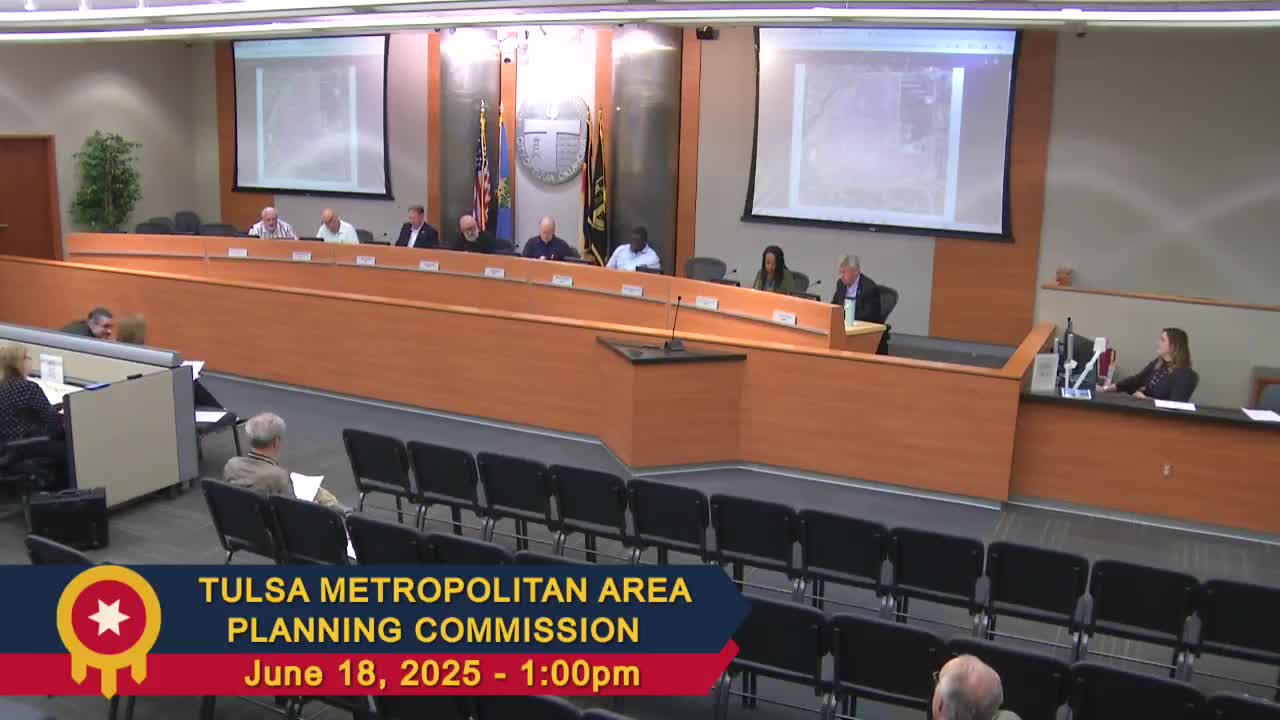
The Planning Commission took mixed action on proposed zoning code amendments to the historic preservation (HP) overlay rules.
Staff presentation and background: Felicity Goode of the Tulsa Planning Office said the preservation commission initiated the amendments to address the growing number and scale of accessory buildings (particularly accessory dwelling units) in historic districts. The draft amendment removes a broad exemption for detached accessory structures and instead would require historic preservation permit review where structures are located in the street yard or are taller than 8 feet and visible from the street. The draft also proposed changing the HP permit review deadline from 30 calendar days to 30 business days and adding administrative clarifications about temporary landscape features and staff review for in-kind repairs.
Public comment and concerns: Brian Whitehurst, representing neighborhood interests, told the commission opposition at neighborhood meetings was "very strong" against abolishing the 30-day limit. He warned that moving to 30 business days could extend review to as much as 48 calendar days when weekends and holidays are considered. He and other residents said they were worried the changes could make modest repairs or garage improvements more costly or discourage repairs to dilapidated accessory buildings. Tracy Hall, a resident of Swan Lake, said she favored keeping repairs simple and asked the commission not to add requirements that might prevent residents on fixed incomes from maintaining garages.
Staff response and clarifications: Goode said the revised draft represented a compromise after neighborhood input: it limits review to structures in the street yard or those over 8 feet in height visible from the street and exempts temporary landscape features. She also said routine repair or replacement in kind is typically processed as a staff approval (no fee) and that staff approvals often have a turnaround of a few business days. Goode noted annual outreach to property owners within HP overlays and said staff had held neighborhood meetings and an online survey.
Commission action: The commission approved the proposed exemption clarification that adds an explicit exemption for temporary landscape features (packet item 70.07(b), adding item 7 as presented by staff). The commission also approved changing the review timeline to 30 business days (packet item 70.07(e)), with the record indicating the preservation commission and applicant can continue items when necessary. However, the commission did not adopt the broader proposed change that residents said would expand review requirements for detached garages (a motion to leave the existing language in place was defeated), meaning the existing rules for repairs and exemptions remain in force for many detached accessory structures outside the street yard.
What this means: Practically, the outcome narrows the scope of new review (staff will review in-kind repairs and most temporary landscape features remain exempt), but the commission formalized a slightly longer review window (30 business days) for HP permit decisions and clarified that applicants who fail to attend a meeting may have their application continued. The staff also emphasized that historic-preservation permit applications are currently free and that staff-level approvals are typically handled quickly.
Speakers quoted or recorded in the hearing are listed below.