Get Full Government Meeting Transcripts, Videos, & Alerts Forever!
Get email alerts on the Insurance Uim topic
No spam. Unsubscribe anytime.
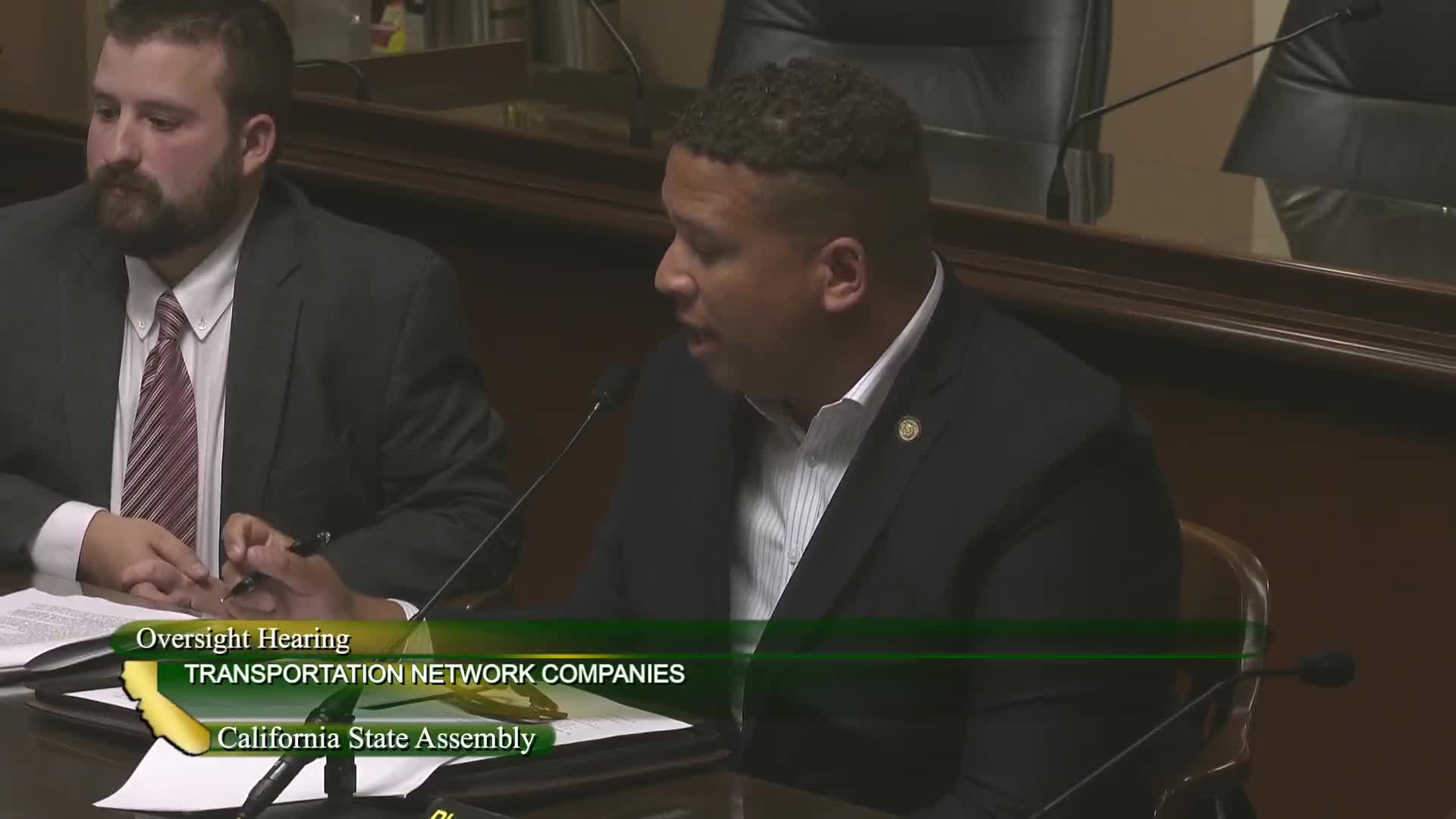
TNC insurance costs and the uninsured/underinsured motorist debate draw scrutiny
Summary
Committee members, TNC representatives and consumer advocates debated a unique uninsured/underinsured motorist (UIM) insurance requirement for TNCs, with companies citing large per‑ride insurance costs and advocates urging caution before lowering coverage mandates.
The hearing turned to insurance, a recurring cost driver for ride‑hail trips and a subject of proposed legislative changes.
Lyft and Uber witnesses said insurance — particularly requirements for uninsured/underinsured motorist (UIM) coverage — is the largest cost driver for rides. Uber told the committee an analysis concluded that, had the current UIM requirement been lower in 2024, Californians might have saved roughly $700 million in aggregate additional costs; company testimony said the insurance portion of some rides has reached as much as 45% of a fare in high‑cost areas.
Lyft said the average insurance cost for rides in California is about $6 per trip and said it is working to make insurance costs more transparent to drivers and riders. Lyft representatives also highlighted earnings programs and a driver earnings guarantee recently launched to ensure 70% or more of rider payments go to drivers on a weekly basis.
Consumer advocates at the hearing cautioned against rolling back coverage without robust data. Sabina Tucker of Consumer Attorneys of California said 10 years of claims data now exist and should inform any change; she said consumer groups are in talks with legislators and industry and emphasized that any reduction in coverage should be accompanied by verifiable protections for injured passengers.
Rail and labor advocates also raised sectoral concerns. A representative from a rail transportation association explained that railroad crew transportation increasingly uses third‑party carriers and warned that reducing UIM mandates could leave rail employees exposed when third‑party carriers are used.
Committee members stressed they want data to support policy choices. Several members requested more granular claims and costs information from the CPUC and industry; CPUC staff described the confidentiality review process for annual reports and said the commission is actively considering requests and appeals that affect the public release of detailed data. The committee did not vote on insurance policy but members said they expect more detailed evidence to be brought forward before any statutory change is considered.