Get Full Government Meeting Transcripts, Videos, & Alerts Forever!
Get email alerts on the Facial Recognition Policy topic
No spam. Unsubscribe anytime.
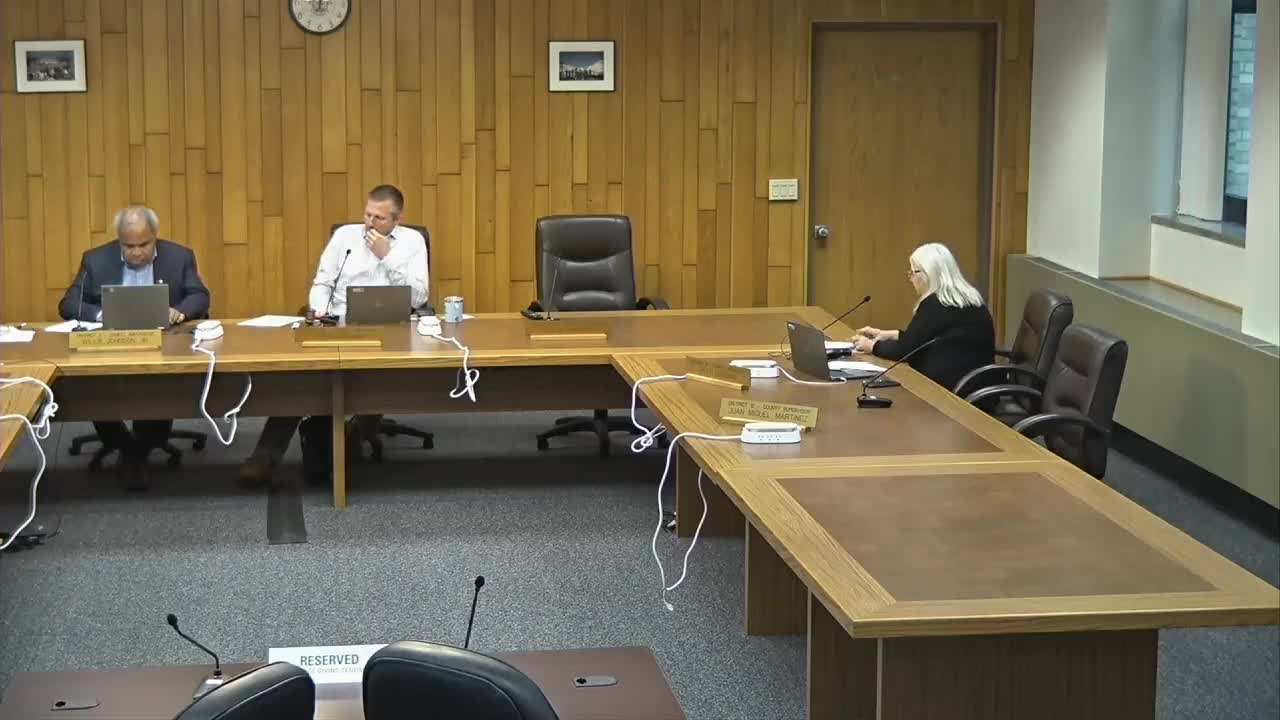
Committee backs policy review on facial recognition; supervisors adopt resolution to develop county framework
Summary
The Milwaukee County Judiciary, Law Enforcement and General Services Committee voted to recommend a resolution calling for a comprehensive policy framework on facial recognition technology; sponsors and public witnesses expressed concern about bias, civil liberties and data‑sharing risks.
The Milwaukee County Board committee on Judiciary, Law Enforcement and General Services voted on June 17 to recommend adoption of a resolution directing development of a comprehensive policy framework governing facial recognition technology (FRT) and related data‑sharing practices.
The resolution, introduced by county supervisors and discussed during the committee meeting, would require county departments to develop safeguards so that any use of FRT does not suppress First Amendment‑protected activity, violate privacy, or otherwise unduly affect civil rights. The committee approved the item by a roll‑call vote, five ayes, zero noes.
Milwaukee County Sheriff Denita Ball told the committee the sheriff’s office was reviewing a proposed data‑sharing agreement related to facial recognition and would work with the county’s Information Management Services Division (IMSD) and the Office of Corporation Counsel before implementing any technology. “An arrest would never be made and a case presented to the district attorney’s office for review based solely on facial recognition identification,” the sheriff said. She added that, if the sheriff’s office decided to deploy any technology, the department would present a written policy for review.
Supporters of the resolution told the committee they feared FRT’s civil‑liberties and bias risks. Testimony from civil‑liberties groups and community advocates cited research and recent national cases showing algorithmic error rates and wrongful arrests tied to FRT, and warned that once surveillance data exist they can be shared with federal or out‑of‑jurisdiction partners. Amanda Merkway of the ACLU of Wisconsin urged transparency and community input, and asked the county to adopt minimum standards including public disclosure of proposed systems, fiscal impact reviews and limits on data sharing.
Other public commenters described how surveillance can chill protest and political participation and cautioned that FRT tools have been used overseas and in the U.S. to target activists and marginalized groups. The Milwaukee Turners, Prison Action Milwaukee and individual residents spoke in favor of the resolution. One committee member cited a local example heard at a Fire & Police Commission meeting where an FRT match reportedly misidentified an individual of color.
Committee discussion focused on the technical and policy safeguards that would be required before deployment. Chief Deputy Brian Barco of the sheriff’s office said the department’s intent was not to install software that would continuously scan cameras or “actively scan” people entering public spaces; rather, he described a limited investigative use in which law‑enforcement investigators would use an image obtained in a particular investigation as one lead among others. Barco emphasized that any FRT match would be vetted and would not by itself be a basis for arrest or charging.
The committee approved the resolution on a motion by Supervisor Martinez. Roll‑call votes recorded Ayes from Supervisors Capriollo, Johnson Junior, Logsdon, Martinez and Chair Belinski; no members voted no. After the vote, sheriff’s office representatives reiterated their plan to consult IMSD and Corporation Counsel before implementing any technology and to bring policy language forward for review.
Ending: The committee’s vote sends the resolution forward for adoption by the full board; it also signals heightened scrutiny of any future county proposals involving facial recognition or related data sharing. The resolution asks county departments to prepare standards and public notice requirements before any procurement or deployment and requests that officials involve the public in developing those safeguards.