Get Full Government Meeting Transcripts, Videos, & Alerts Forever!
Get email alerts on the Humanitarian Aid topic
No spam. Unsubscribe anytime.
U.N. warns Gaza humanitarian crisis worsening as malnutrition rises and fuel runs low
Summary
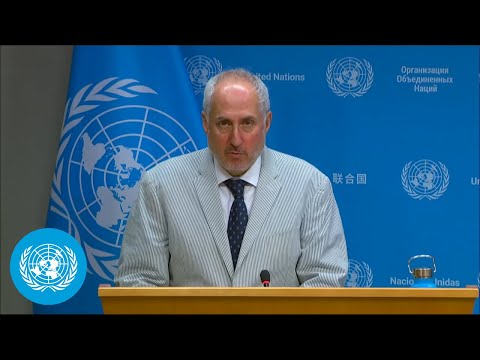
The U.N. spokesperson said UNICEF and humanitarian agencies reported steep increases in child malnutrition, widespread displacement orders, and severe fuel shortages that constrain life‑saving services in Gaza.
The U.N. spokesperson told reporters that U.N. humanitarian colleagues reported another displacement order affecting two neighborhoods in northern Gaza and that Israeli authorities facilitated 12 of 21 humanitarian movement attempts while denying five and forcing four cancellations.
The spokesperson said no fuel has entered the Gaza Strip for 16 weeks, though a limited amount retrieved from a fuel station in Rafah allowed some desalination plants, water trucking services, and sewage pumping stations in southern Gaza to operate. The spokesperson said fuel instability and shortages continue to limit operations and reduce service hours and capacity.
Referencing UNICEF figures, the spokesperson said more than 5,100 children aged 6 months to 5 years were admitted for treatment for acute malnutrition in May alone — a nearly 50% increase from April and a 150% increase from February. The spokesperson said UNICEF reported that from the start of the year through May more than 16,700 children — an average of 112 per day — have been admitted for malnutrition treatment, and added that "each of these cases is preventable." UNICEF called for Israel to urgently allow large‑scale delivery of life‑saving aid through all border crossings.
Humanitarian deliveries: The spokesperson said the equivalent of about 1,000 truckloads of health, nutrition and other supplies were staged outside Gaza and ready for delivery. Over the previous two days, humanitarian partners provided services to more than 1,400 children and caregivers across 10 locations in Gaza City, Deir al‑Balah, and Khan Younis, including psychosocial support and case management.
Why it matters: The combination of displacement orders, denied humanitarian movement attempts, and prolonged fuel shortages is constraining water, sanitation and health services and contributing to a rapid rise in severe malnutrition among young children.