Get Full Government Meeting Transcripts, Videos, & Alerts Forever!
Get email alerts on the International Security topic
No spam. Unsubscribe anytime.
U.N. urges diplomacy as Iran–Israel tensions raise nuclear safety concerns
Summary
The U.N. spokesperson said the secretary-general and senior U.N. officials urged diplomacy and raised alarms about attacks on nuclear facilities, calling for full IAEA access and protections for nuclear sites.
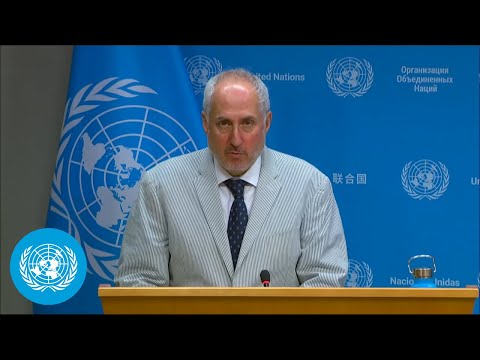
The U.N. spokesperson told reporters that the secretary-general urged Israel and Iran "to give peace a chance" and warned that the situation risks rapidly escalating. The spokesperson said the secretary-general described the Treaty on the Non‑Proliferation of Nuclear Weapons as "a cornerstone of international security," and said Iran must respect it.
The spokesperson said the secretary-general and senior U.N. officials called for diplomacy as the "only way to bridge the trust gap" with Iran, and urged a "credible, comprehensive, and verifiable solution, including full access to the inspectors of the International Atomic Energy Agency." Rosemary DeCarlo, Under‑Secretary‑General for Political and Peacebuilding Affairs, told the Security Council the scope and scale of attacks in Iran and Israel were widening with "grave consequences for civilians in both of these countries." She said international humanitarian law must be respected, including "the principles of distinction, proportionality, and precautions in any attack."
The spokesperson reported that IAEA leadership told the Security Council attacks on nuclear sites in Iran have sharply degraded nuclear safety and security, though there had been no reported radiological release affecting the public so far. "He [the IAEA official] said he's ready to travel immediately and to engage with all relevant parties to ensure the protection of nuclear facilities," the spokesperson said, referencing the agency's offer to deploy nuclear safety and security experts where necessary.
Why it matters: U.N. officials presented the matter to the Security Council as both a nonproliferation and humanitarian concern. Damage to nuclear infrastructure, even without an immediate radiological release, raises long‑term safety risks and complicates diplomatic efforts to reduce tensions.
What officials said: The U.N. spokesperson summarized the secretary‑general's appeal for diplomacy and repeated the U.N.'s call for unhindered inspector access. DeCarlo emphasized civilian harm from the intensifying attacks and counseled all parties to pursue de‑escalation and peaceful dispute resolution. The IAEA's readiness to send experts was presented as a technical complement to political efforts.
Context and next steps: The U.N. will continue to brief the Security Council; the spokesperson said the U.N. welcomes ongoing ministerial talks that could help de‑escalate the situation. No formal Security Council decision or resolution was announced during the briefing.