Get Full Government Meeting Transcripts, Videos, & Alerts Forever!
Get email alerts on the Beach Remediation topic
No spam. Unsubscribe anytime.
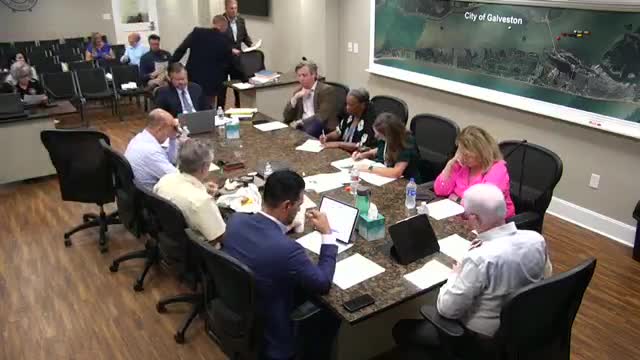
Galveston IDC defers vote on proposed beach remediation crew funding after extensive debate
Summary
The Industrial Development Corporation deferred action on a proposal to fund a beach erosion and remediation crew — $750,000 first year and $500,000 annually afterward — asking staff to return with alternatives, legal guidance and narrower project definitions.
The Industrial Development Corporation of the City of Galveston on June 17 deferred action on a plan to fund a beach erosion and remediation crew that would cost $750,000 in the first year and $500,000 annually thereafter.
Board members, city staff and public commenters debated whether the proposed work — described by staff as sand removal, sifting and placement, dune plantings, sand fencing and bollard installation — fit the legal purpose of the city’s 4B (beach) sales-tax “beach silo” and whether the city should buy equipment or rely on rentals and private contractors. After extended discussion the board voted to defer the item so staff could return with alternative approaches and legal opinions.
The proposal, presented as Agenda Items 6(a) and 6(b), would have adopted a resolution and an economic development agreement to fund ongoing remediation and an on-call crew. City staff described likely activities as removing sand from public streets and beach-access entrances, sifting that sand and replacing it in designated dune restoration areas, installing sand fencing and native plantings, and reinstalling bollards damaged by storms.
Resident Marty Fluke, who identified himself as a Galveston property taxpayer, urged caution on use of IDC funds and suggested hotel-occupancy tax or parkboard contracts as alternative funding sources. "I'm a payer of ad valorem tax and sales tax... this is what the park board does," Fluke said, arguing the city should seek lower-cost contracting or use other funding silos.
Several board members voiced concern about “creep” — the idea that routine city services, such as street maintenance, could be shifted onto IDC funds. Board member Keith Bassett said he feared the proposed program could be perceived as paying for work the city should fund through operations. Others, including members supportive of targeted beach work, said public-works crews were already stretched thin handling sand removal and infrastructure repair and that the island needs a focused program to address high-tide and erosion impacts.
Staff said one option is to lease equipment or use contractors for high-intensity needs and to assign smaller planting and fencing tasks to existing crews. Staff also said that state Attorney General opinions and case law leave it to the board and council to determine whether proposed expenditures meet the statutory purpose of a 4B sales-tax silo; a taxpayer could later challenge that decision in court.
After discussion, a motion to defer the resolution and the economic development agreement passed unanimously among those present. The board directed staff to return with alternative approaches (including rental vs. purchase options and contracting models), cost comparisons and a legal opinion about eligibility under the 4B beach-silo language before the board takes final action.
The item will go to city council for a required public hearing if and when the board authorizes the expenditure.