Get Full Government Meeting Transcripts, Videos, & Alerts Forever!
Get email alerts on the Land Use topic
No spam. Unsubscribe anytime.
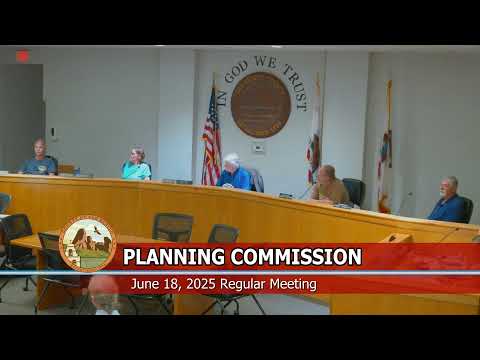
San Benito Planning Commission signs off on changes to Title 23 subdivision rules
Summary
The Planning Commission approved amendments to Title 23 that clarify frontage, require frontage improvements for subdivisions of five or more lots, ask for traffic nexus studies, and remove the proposed 10-year lookback; the commission approved the package 5-0.
The San Benito County Planning Commission on Wednesday approved a package of amendments to Title 23 of the county code that tighten requirements for frontage improvements and traffic mitigation on new subdivisions.
The commission voted 5-0 to recommend that the Board of Supervisors adopt the revisions, which add a definition of “frontage,” require property dedications and frontage improvements for subdivisions of five or more lots, and require traffic nexus studies for projects of between five and 50 lots. The package also leaves open the option for applicants with more than 50 lots to enter development agreements governed by Title 19.
Planning staff said the update is intended to make clear when sidewalks, curbs, gutters and underground utilities are required and to tie improvements to the circulation and transportation elements of the general plan. Steve Loop of the public works department read the proposed code changes aloud at the public hearing and explained the new definitions and standards, including a provision that “frontage shall be defined as a project site's property boundary along the county right of way [and] include both sides of the abutting road unless otherwise determined by the county engineer or the planning commission.”
The revisions set a multi-tier approach to required improvements: subdivisions of five or more lots must dedicate frontage and improve the full width of the road along their parcel; projects of five to 50 lots must prepare a traffic nexus study and incorporate mitigation into conditions of approval; projects of more than 50 lots may be required to enter a development agreement under Title 19.
During public comment, resident Seth Capone questioned language in section J1 addressing subdivisions of four or fewer lots, noting the draft used “may” instead of “shall” for right-of-way dedication. “I thought that was pretty much standard that we required that in the past,” Capone said. County staff agreed they would modify that language at the commission’s direction.
Commission debate centered on the ordinance’s look-back provision that would trigger larger improvement requirements if further subdivisions pushed a parcel to five or more lots. Commissioner Robert Gibson said he opposed a 10-year look-back and pressed for a longer period. “I don't like the 10 year look back. I'd rather increase it to 20,” Gibson said. Commissioners then directed staff to remove a fixed time limit so that cumulative subdivision leading to five or more lots would trigger the higher standard regardless of when earlier divisions occurred.
County counsel noted limits on the county’s authority. “You're correct there. We can't force somebody to enter into a bilateral agreement, including a development agreement,” counsel said when commissioners discussed the provision that an applicant “may enter into a development agreement.” The commission left that language as permissive while clarifying obligations that apply absent an agreement, including frontage dedication, frontage improvements and required nexus studies.
The commission adopted the motion to approve the package with the changes noted and directed staff to forward the resolution to the Board of Supervisors. The motion carried 5-0.
Commissioners and staff said further refinements could be made as the Board of Supervisors reviews the draft ordinance.
Minutes and staff materials filed with the county provide the full redline of the Title 23 changes and the resolution the commission forwarded to the board.