Get Full Government Meeting Transcripts, Videos, & Alerts Forever!
Get email alerts on the Tourism Promotion topic
No spam. Unsubscribe anytime.
Brookings council weighs returning Tourism Promotion Advisory Committee
Summary
City staff briefed council on the history and structure of the Tourism Promotion Advisory Committee and council members signaled broad support to return a retooled TPAC by ordinance, with clearer guidelines, transparency and performance measures.
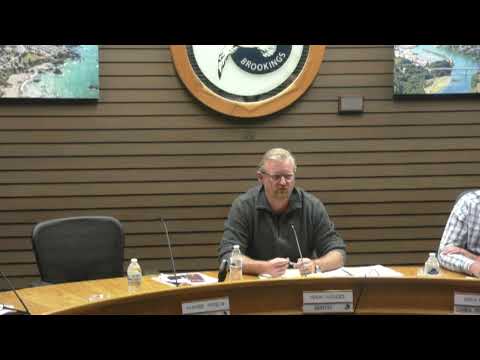
Brookings — City Manager presented a review of the Tourism Promotion Advisory Committee (TPAC) during the Jan. 27 Brookings City Council meeting and council members broadly supported returning a retooled advisory body to advise on use of transient lodging tax (TLT/TOT) funds for tourism promotion.
City Manager said TPAC was created in 2014 to advise the council on tourism promotion and the use of TLT/TOT revenues, but the committee’s role and workload changed over time and the council amended the ordinance in 2020 to remove TPAC’s active role and return program administration to staff. “The committee had no authority to spend or approve expenditures, just make its recommendations through the council,” the City Manager said while reviewing the original ordinance and membership rules.
The manager reviewed TPAC’s original mission, membership rules and annual expenditures dating to 2013 and noted that after 2020 the city continued tourism promotion spending but via a staff-led application process rather than an active TPAC. He said some years had budgets of roughly $50,000 for advertising and events and that the ordinance changes in 2020 struck through much of the original TPAC language, making a future re-establishment easier than starting from scratch.
Councilors and members of the public urged bringing back a stakeholder committee but recommended revisions. “Business owners in the community that are involved in tourism ... are a lot more familiar with what works and what doesn't work with tourism promotion,” Councilor Martin said, arguing for a TPAC that includes local business stakeholders and expanded responsibilities for economic development and downtown promotion.
Councilors also raised concerns about measurement and transparency. “We would need to make sure that we could track the success of what was actually proposed and done,” one councilor said, recommending a performance matrix that could track hotel room nights, attendance and advertising spend for funded events.
Longtime community event organizer Mike (last name not specified) told the council TPAC played an important role in launching several events, including Oktoberfest and an April “Beat the Brewers” event. He urged streamlining award procedures and ensuring funds can be released to organizers before events, rather than reimbursing only afterward.
Several councilors proposed a hybrid or scaled version of TPAC — fewer meetings (biannual or as-needed), clearer eligibility and conflict-of-interest rules, standardized applications and measurable outcomes. Staff said they would draft an ordinance and return with a workshop item and suggested measures for evaluation and clearer expectations of what the committee would and would not do.
The discussion was informational only; the council did not adopt an ordinance at the meeting. City staff said they would prepare draft language and bring it back to a future workshop during budget season.
Members of the public who spoke on TPAC included Mike (event organizer) and former TPAC participants. City staff identified areas to address in a draft ordinance: membership qualifications, term limits, conflict-of-interest rules and a performance evaluation matrix for funded events.
Next steps: staff will prepare draft ordinance language and a proposal for council review at a future workshop and in the upcoming budget process.