Get Full Government Meeting Transcripts, Videos, & Alerts Forever!
Get email alerts on the Community Development Block Grant Cdbg topic
No spam. Unsubscribe anytime.
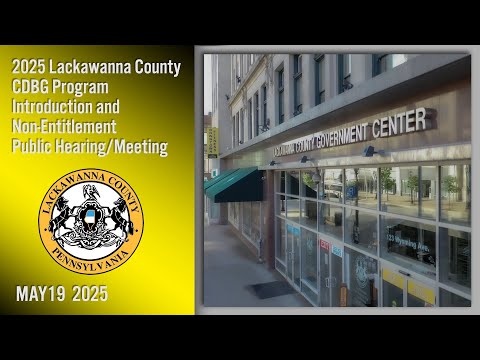
Lackawanna County holds hearing to solicit 2025 CDBG project ideas for non‑entitlement communities
Summary
County planning staff described the Community Development Block Grant program, eligible and ineligible activities, and solicited project proposals for 2025 allocations that have not yet been released by the state.
Joe Rubinsky, community manager for the Lackawanna County Department of Planning and Economic Development, opened a public hearing to solicit project ideas for the county’s 2025 Community Development Block Grant (CDBG) allocations.
“The purpose of this public hearing is to discuss the 2025 community development block grant program for non entitlement entitlement communities,” Rubinsky said. He identified the department as the county’s administering agency and noted staff members present, including fiscal manager Mark Mercante and business consultant John Joyce.
The CDBG program provides federal funds from the U.S. Department of Housing and Urban Development, administered in Pennsylvania by the Department of Community and Economic Development. Rubinsky said the program’s purpose is to help communities prepare plans and carry out projects that address the needs of low- and moderate-income individuals, support housing and community facilities, and pursue economic revitalization.
Rubinsky listed examples of projects the county has funded in recent years: water and stormwater improvements, street repairs, parks and recreation upgrades, senior center facilities, housing construction, and public services. He also identified several types of ineligible activities, saying the program excludes “buildings or portions thereof used for general conduct of government, operating maintenance expenses, purchase of construction equipment, fire protection, and income payments.”
Rubinsky summarized the CDBG program’s three federal national objectives, as stated in the hearing: activities must principally benefit low- and moderate-income persons; prevent or eliminate slums and blight; or address urgent threats to public health or safety. He said eligibility and final allocations are determined through coordination among the county, municipal applicants and the state agency.
County staff said they are accepting project ideas from boroughs and municipalities for 2025 allocations, but that the county had not yet received the allocation figures from the state. “The 2025 allocations are not yet available,” Rubinsky said, and the county will notify the public and hold additional hearings once the state releases the amounts.
Rubinsky said no questions or comments were offered during the hearing. He encouraged municipalities to contact the Department of Planning and Economic Development for guidance and said staff will collect proposals over the next several months, noting that several prior-year projects remain active.
The public hearing concluded after staff described the solicitation process and next steps for notifying municipalities once allocations are released.