Get Full Government Meeting Transcripts, Videos, & Alerts Forever!
Get email alerts on the County Budget topic
No spam. Unsubscribe anytime.
Alfalfa County commissioners debate using cash accounts, reserves to cover salaries as revenue estimates fall short
Summary
Commissioners spent the bulk of the meeting discussing shortfalls in estimated revenue, proposals to pay portions of certain elected offices’ salaries from cash accounts, and options for paying county insurance; several financial motions were approved.
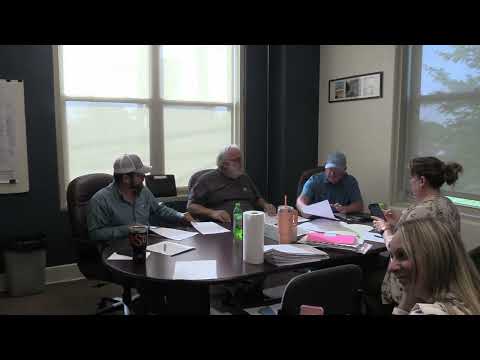
Alfalfa County commissioners spent significant time at their meeting discussing how to cover projected shortfalls in the current fiscal year and whether to use cash accounts or emergency reserves to pay personnel costs.
The board discussed proposals to allocate half a year of salary for some offices — the treasurer, the assessor and the court clerk — and for the county purchasing agent, by moving portions of personnel costs into different cash accounts. Commissioners said some offices already use cash accounts to pay employees and that shifting funds now could reduce the need to draw from other accounts later. One participant said Buddy had “shot all estimated revenue very low” and that final figures would not be known until the fiscal year ends.
Why it matters: Commissioners said the county’s estimated revenues are uncertain and that decisions now will affect next year’s budget. They debated whether to draw down emergency reserves or reassign sales-tax-funded cash accounts to cover immediate personnel costs, and flagged potential impacts on the sheriff’s office if cuts continue.
Board members discussed several numbers during the debate: an insurance bill through ACCO CIG totaling $118,006.15 and a cost difference of $1,007.79 if the county splits payments versus paying in full; a penciled-in $71,000 figure tied to other budget items; and an account balance of $113,004 cited in discussion of cash balances. Commissioners also noted that ARPA funds and LATCF funds are exhausted for the county’s current needs.
Several motions addressing routine and financial items were recorded during the meeting. The board approved a 60/40 allocation for SIP-related payments with highway paying 60 percent, approved routine minutes and statements, and approved options for property resale notices. Commissioners voted to pay the county’s ACCO CIG insurance bill in a single payment rather than split installments, citing a small total savings difference if paid in full.
The discussion included repeated requests for clearer, final numbers: commissioners asked staff for updated June 30 reports, and to confirm which cash accounts legally may be used to pay salaries. One speaker noted that some state-designated M&O (materials and operations) accounts have restrictions and cannot be repurposed for salaries without specific authorization. Commissioners repeatedly emphasized that some transfers will require formal budget amendments or judicial approval in specific accounts (for example, revolving funds that require district-judge approval).
Quotes from the meeting included a note about revenue estimates: “Buddy shot all estimated revenue very low. We, again, won't know any of that until the fiscal year ends,” and a comment on insurance payment options: “If you make it in 2 payments, the total is $1.23 94. So that's a difference of holding it off. $1,007.79.” Those quotations were recorded in the meeting transcript and attributed to unnamed meeting participants who spoke during the budget discussion.
The board asked staff to return with more precise reconciled figures and to flag which uses of cash accounts would require formal approval or are restricted by statute or grant rules. No ordinance changes or long-term policy changes were adopted during the discussion; the meeting produced short-term payment decisions and direction to gather more complete fiscal data.
Ending: Commissioners scheduled follow-up work for staff to provide reconciled year-end reports and to clarify legal limits on reassigning cash accounts before finalizing any sustained personnel funding changes.