Get Full Government Meeting Transcripts, Videos, & Alerts Forever!
Get email alerts on the Social Services topic
No spam. Unsubscribe anytime.
Unsheltered homeless task force presents early findings; estimates 50–60 unsheltered within city limits
Summary
The council received an update from the volunteer Unsheltered Homeless Task Force. The panel reported data compiled from local nonprofits and agencies, estimated 50–60 unsheltered persons within Bartlesville city limits (100–110 including surrounding areas), and said the group is still compiling options and has not proposed ordinances.
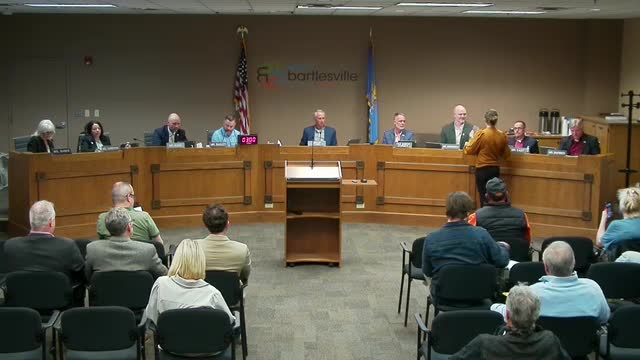
Rachel Schoeller, representing the volunteer Unsheltered Homeless Task Force, provided the Bartlesville City Council an update on March 3 about the group’s early work, data and next steps.
Scholler said the task force — which has 16 members from diverse backgrounds, including law enforcement, health care, veterans and nonprofits — has met three times and will report to the council every other month. The task force reviewed data from local service providers: Be The Light reported it served about 97 individuals in 2024 and 111 so far in 2025; Grand (Grand Mental Health) and the Bartlesville Police Department provided outreach statistics; Agape provided meal counts (nearly 6,000 meals served so far in 2025 and about 65,000 in 2024, data she said reflected counts through January/early February).
Scholler said the committee has focused on distinguishing “homeless” (lacking a permanent address) from “unsheltered” (sleeping outside, in a tent, car or makeshift shelter). Based on outreach data, the task force estimates roughly 50–60 unsheltered individuals regularly within the Bartlesville city limits; that number could double (100–110) if nearby areas outside the city limits are included.
She said the task force has reviewed ordinances and case studies from other cities (including Austin, Texas, and the recent U.S. Supreme Court–related case involving Grants Pass, Oregon) but has not proposed changes or ordinances. Scholler said the group has identified gaps in data and coordination and intends to refine recommendations and work plans before proposing policy changes.
Council members praised the task force’s broad participation and noted the value of including a person with lived experience. Council and staff described ongoing coordination with Grand Mental Health, Agape and other nonprofits, and noted that some services (for example, warming centers) operate on limited schedules tied to weather conditions.
Why it matters: The task force’s preliminary statistics and cross-agency coordination will inform future city recommendations or referrals to staff and could guide policies or service investments affecting unsheltered residents.
What’s next: The task force will continue meetings and prepare actionable items and potential ordinance language for committee review before any council consideration.