
Nevada disability advocates and residents urge lawmakers to protect Medicaid funding and Betty’s Village housing
Get AI-powered insights, summaries, and transcripts
Sign Up Free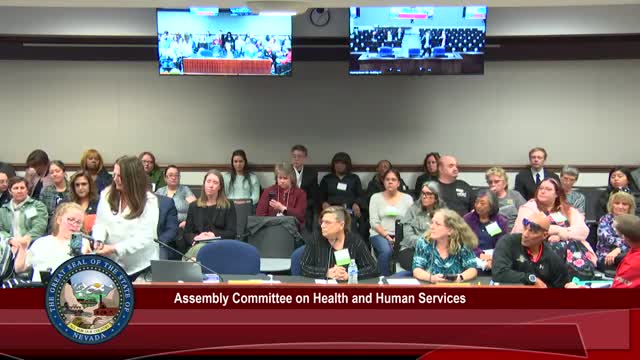
Summary
Dozens of disabled residents, family members and service providers testified during public comment, urging lawmakers not to cut Medicaid and describing how programs and housing such as Betty’s Village support independence, medical care and employment for people with disabilities.
A series of public‑comment speakers told the Health and Human Services Committee that proposed Medicaid cuts would threaten independent living, medical care and specialized services for people with disabilities. Speakers included people with disabilities who live at Betty’s Village, family members, clinicians and advocacy organizations.
Shelby Benzie, a University of Nevada, Reno student who uses a power wheelchair, said she could not imagine life without her wheelchair and urged lawmakers to think about “what you're taking away.” Carol Matrone and family members described Betty’s Village — a supported independent‑living development — as a place that enabled adults with disabilities to work, decorate their own apartments and avoid long bus trips to jobs. “Our individuals can be adequately funded. Our waiting lists don't grow exponentially,” Matrone said, asking lawmakers to continue funding personal care services, transportation and vocational services.
Several family members described the consequences of losing waivers and Medicaid supports. Jodi Collins said her 29‑year‑old son Andre moved into Betty’s Village in April 2024 and now works next door at Opportunity Village. “Pulling back that independence my son is already enjoying would be devastating to his mental and physical well‑being,” Collins said. Another parent, who identified herself as a shared‑living provider, said northern Nevada lacks residential options for medically complex adults and asked lawmakers not to cut home health care, nursing services, host home and shared living provider supports.
Clinicians and therapists also testified. Judy Ishibashi, an occupational therapist, recounted long relationships with clients and emphasized the social and developmental benefits of community inclusion. A vice president of the Nevada chapter of the Council for Exceptional Children urged expanded transition and habilitation services to help young adults with developmental disabilities gain independent living and employment skills.
Speakers who live at Betty’s Village described daily life and the risk of losing it. Victoria Gonzales, a resident, said she has a shunt and regular neurosurgical care and warned that loss of coverage could threaten her health. Others said the site’s proximity to Opportunity Village reduced travel time to work from an hour or more on public transit to a five‑minute roll.
Advocates said about 35 people traveled from Las Vegas to testify in person and that local programs have already helped hundreds obtain IDs and birth certificates to access services. Several witnesses asked lawmakers to oppose Medicaid cuts and to maintain waiver funding so adults with disabilities can live independently.
Committee members did not act on budgetary items during the recorded hearing; public comment was taken at the start and end of the meeting. The speakers’ requests are public testimony to committee members who will consider budget and policy proposals later in the session.
Why this matters: Speakers described concrete dependencies on Medicaid waivers and home‑and‑community‑based services for daily living, medical care and employment. Testimony emphasized that cuts would risk longer institutional placements, unfilled caregiver needs and loss of independent housing.
What to watch: If budget proposals include reduced Medicaid or waiver funding, committee staff and members may request impact analyses and program‑specific budget language for services such as personal care, transportation, and sharedliving/host home programs.