Get Full Government Meeting Transcripts, Videos, & Alerts Forever!
Get email alerts on the Bioincentive Definition Fix topic
No spam. Unsubscribe anytime.
Committee reviews technical fix to bioincentive statute to restore 'advanced' biofuel definition
Summary
House File 1,500 would add the word “advanced” to a statutory definition used by the Bioincentive Program. Testimony said a drafting error in 2023 removed that limiting word and resulted in denials of applications; the committee laid the bill over for further consideration.
The committee considered House File 1,500, a technical amendment to the Bioincentive Program statute intended to restore the program’s original focus on advanced biofuels.
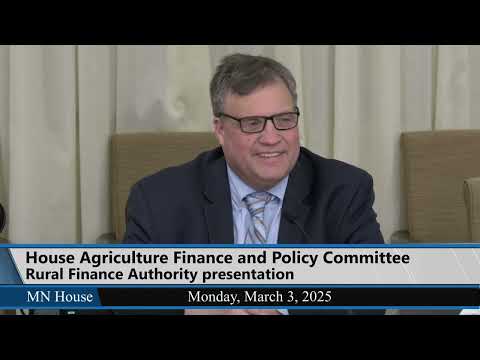
Chair Anderson moved the bill and the committee heard from Brian Werner, Executive Director of the Minnesota Biofuels Association. Werner defined “advanced biofuel” in testimony as “a renewable fuel with at least 50% lower greenhouse gas emissions on a life cycle basis than petroleum,” and said many Minnesota producers now produce ethanol from corn kernel fiber—a process that can reduce greenhouse gas emissions by about 70% compared with petroleum under life‑cycle modeling. He told the committee that a drafting error in a 2023 amendment removed the word “advanced” from the statute, creating an interpretation problem: the department had been treating the production cap as applying to total biofuel production rather than incremental advanced biofuel production, leading to denials of otherwise eligible applicants.
Werner: “When this program was established, the production cap was put in place to ensure that only new and additional production of advanced biofuel would qualify. It was never meant to apply to existing production.”
Why this matters: House File 1,500 is a one‑word technical fix supporters say will restore the program’s legislative intent so that ethanol produced by newer advanced processes can qualify for performance‑based bioincentive payments.
Committee action: Chair Anderson moved the bill; committee laid House File 1,500 over for possible inclusion in a budget bill. No final appropriation was adopted in committee.
Notes on metrics and modeling: Representative Hansen asked whether emissions reductions cited were based on modeling or monitoring; Mr. Werner said the 70% reduction figure is based on life‑cycle modeling. The transcript does not include independent audit or monitoring data for modeled claims.
Ending: The committee held the bill over for further consideration as part of the budget process.