Get Full Government Meeting Transcripts, Videos, & Alerts Forever!
Get email alerts on the Uninsured Employers Fund topic
No spam. Unsubscribe anytime.
Legislators Hear Urgent Solvency Warning for Maryland Uninsured Employers Fund
Summary
Analysts and the Maryland Uninsured Employers Fund told the Public Safety and Administration Subcommittee that the fund faces insolvency risks in 2027 unless a combination of collection improvements, assessment changes and administrative reforms proceed.
Delegates and analysts heard that Maryland's Uninsured Employers Fund, which pays medical and other benefits to workers whose employers lack workers'compensation insurance, faces a risk of insolvency as soon as fiscal 2027.
Micah Richards, analyst with the Department of Legislative Services, told the Public Safety and Administration Subcommittee that the fiscal 2026 allowance for the fund rises 1.7% to about $6.1 million but that expenditures exceeded revenues in fiscal 2023 and 2024. "Starting in fiscal 22, the significant increase in administrative costs, which are payments to CorVel, is the primary cause of expenditures exceeding revenues," Richards said during the committee hearing.
Why it matters: UEF pays medical bills and benefits for injured workers when employers lack required coverage. A shortfall would directly affect payments for ongoing claims and could leave injured workers without timely care or compensation.
DLS'recommended changes and flagged multiple proposals from a 2024 joint chairmen''report and work group intended to improve long'term solvency. Recommendations cited in the analysis included closer oversight of administrative affairs, bringing claims management in house (the fund requested a feasibility study), contracting with private collections firms while retaining central collections, increasing the allowable assessment on awards and settlements, and redirecting certain penalties to UEF.
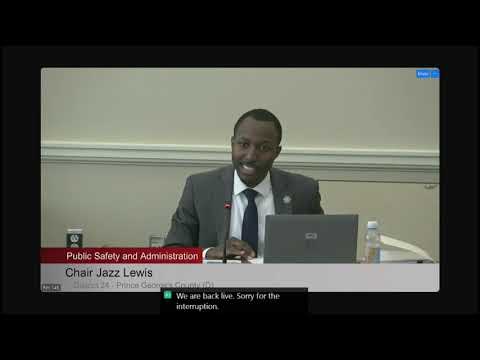
Michael Burns, director of the Maryland Uninsured Employers Fund, agreed the fund faces revenue challenges and emphasized enforcement and collection work. "This agency has an issue with revenue, not expenditures," Burns told the committee. He described steps the agency already takes to collect debts, including payment plans and confessed-judgment notes, and said roughly 80% to 90% of UEF funding comes from a statutory assessment tied to workers'compensation orders.
On administrative costs, committee members and DLS focused on the fund's payments to its third'party administrator, CorVel. DLS noted CorVel was paid roughly $11.5 million by UEF over five years and that the Board of Public Works approved CorVel's continued contract through Oct. 31, 2029; CorVel's remaining contract payments were reported as approximately $8.4 million. DLS asked UEF to explain why CorVel should remain the TPA and why CorVel costs are expected to fall about 20% during the contract term.
Policy steps under consideration: Burns and DLS both discussed two bills referenced in testimony. One, described in the analysis as Senate Bill 219 (paralleled by House Bill 193 in the Administration's package), would make an optional increase to the assessment on awards and settlements; Burns said a compromise amendment would raise the optional assessment by 0.5 percentage points (to 2.5%) rather than the originally proposed 1 percentage point. DLS also described proposed Senate Bill 227, which would require the Workers'Compensation Commission to make UEF a party to claims filed against uninsured employers to speed payment.
Burns urged the committee not to view the fund as "an insurance company," stressing UEF does not issue policies and that it has recently improved reserve practices and claim accounting. He noted obstacles to collections, including employer name changes and federal bankruptcy, and said stronger penalties and enforcement should help. "When this penalty is enforced and the numbers start to come in, this will help alleviate the situation," Burns said referring to a statutory penalty increase for failure to have insurance.
DLS and the fund also highlighted two other near'term actions: DLS recommended UEF report by Dec. 1, 2025, on whether a TPA is required for the full five'year contract term, and the Office of Legislative Audits will issue an audit in calendar 2025. DLS told the panel it expects UEF will become insolvent in fiscal 2027 under current assumptions unless reforms or revenue increases occur.
What's next: Committee members asked for follow'up information on projected revenue from increased penalties and the impact of proposed bills. Burns invited follow'up meetings to discuss collection strategies, the central collections unit and the potential use of private collection agencies.
Ending: The committee did not take a recorded vote on any bill during this hearing; staff requested follow'up materials and plans to monitor the fund's responses to DLS and the audit.