Get Full Government Meeting Transcripts, Videos, & Alerts Forever!
Get email alerts on the Student Outcomes Monitoring topic
No spam. Unsubscribe anytime.
District monitoring: third‑grade literacy flat; eighth‑grade math shows some gains, staff outline next steps
Summary
District staff and external research partners presented progress monitoring on third‑grade English language arts and eighth‑grade math, reporting flat SBAC literacy performance over several years and mixed early results in math. Presenters emphasized curriculum implementation, coaching, and focused supports for multilingual learners.
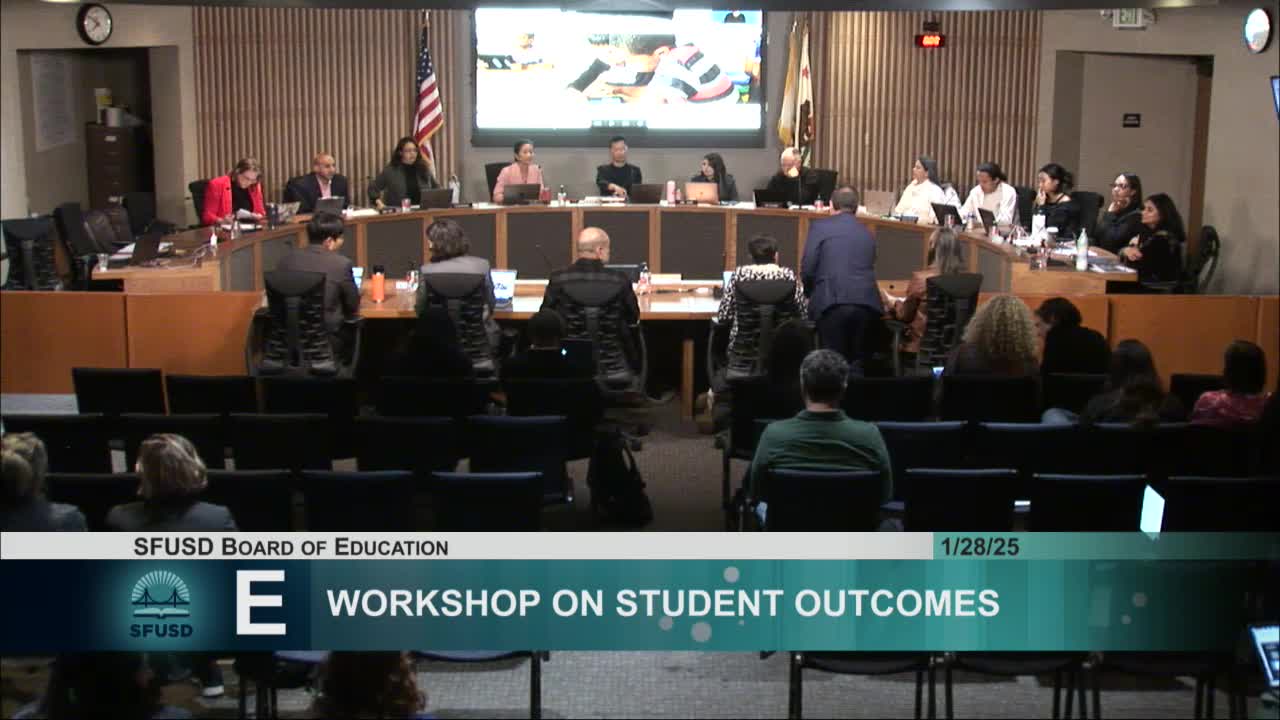
District staff and Research for Action (RPA) presented an interim monitoring report at the board’s student‑outcomes workshop, showing relatively flat third‑grade SBAC English Language Arts (ELA) proficiency over several years and a decline in historical math performance followed by promising early gains this school year in eighth‑grade math.
Moon Hak Kim of RPA reviewed longitudinal SBAC ELA proficiency charts and STAR interim assessment results. The report noted the district’s 70% SBAC proficiency target for 2027 remains ambitious; because last year’s results fell short of the prior target, staff adjusted the short‑term trajectory. The district’s STAR interim assessment administration showed declines in some groups, notably third‑grade English learners, and higher participation rates in several early grades. RPA and curriculum staff emphasized that STAR is highly correlated with SBAC and a useful predictor of summative results.
Curriculum and instruction staff described implementation steps tied to a theory of action: adoption and use of new grade‑level materials, structured coaching, learning walks, and professional learning. Executive Director Devin Krugman and others reported evidence from learning‑walk observations that 84% of classrooms sampled were using new materials and 95% showed strong classroom culture. They noted gains in explicit foundational‑skills instruction and in text‑dependent questioning and tasks, while identifying continued needs for strengthening the transfer of language skills for English learners.
On math, staff summarized a middle‑school curriculum pilot with more than 80 middle‑school educators and a larger elementary pilot cohort. Preliminary, cautious analysis from RPA indicated promising pilot effects at the middle‑grade level (preliminary differences favoring pilot classrooms), though the presenters stressed caveats about limited time between curriculum rollout and the fall assessment window. Staff described coaching supports, lesson‑study integration, and plans for a full pilot data report ahead of any formal adoption recommendation in March.
Board members pressed staff on the “why” behind the data — whether differences are cohort effects, implementation fidelity, or related to variations in school‑level staffing, vacancies and supports. Commissioners asked for more disaggregated data by school site, grade, and focal population (including students with disabilities and multilingual learners) and for cross‑referencing of implementation indicators (usage of materials, coaching intensity, vacancies) with outcomes. Staff committed to deeper analysis after the midyear STAR administration and to producing school‑level and cohort‑growth information to support learning and targeted resource allocation.
Presenters also said they were planning teacher‑facing professional learning (e.g., a Language and Literacy Institute and coach network sessions) and emphasized the role of instructional coaches and assistant superintendents in supporting school leaders to apply the core rubric and expand effective practices.