Get Full Government Meeting Transcripts, Videos, & Alerts Forever!
Get email alerts on the Staffing Model Public Comment topic
No spam. Unsubscribe anytime.
Principals, teachers and parents urge board to preserve assistant principals, counselors and school support staff
Summary
Principals, union leaders, teachers, parents and students urged the San Francisco Board of Education during a lengthy public‑comment period to preserve assistant principals, counselors, social workers, reading specialists and librarians, arguing that the staffing model under consideration would undermine legal compliance and support for high‑need students.
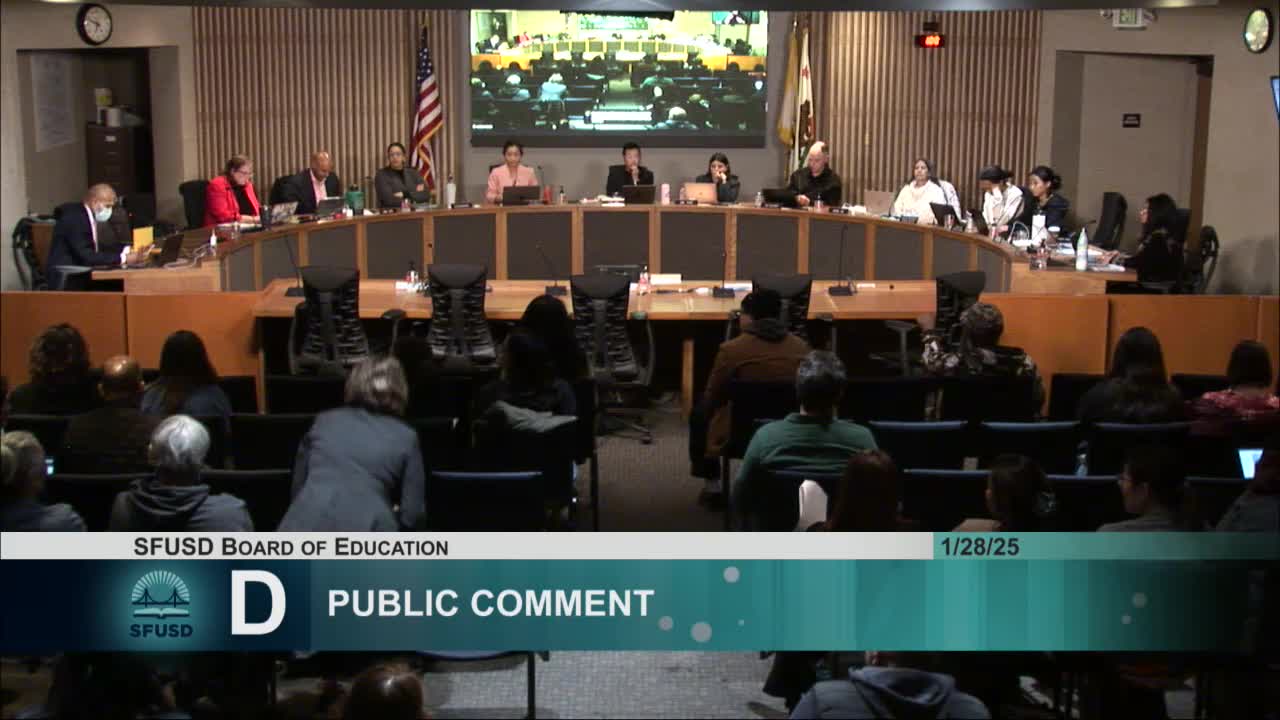
Dozens of principals, assistant principals, union leaders and parents used the public‑comment period at the San Francisco Board of Education’s special workshop to oppose a proposed district staffing model and potential layoffs, warning that cuts to assistant principals, counselors, social workers, reading specialists and librarians would harm students — especially those with the greatest needs.
The speakers, many of whom identified their school and role, urged the board and superintendent to involve site leaders in staffing and budget decisions and to allow schools greater flexibility to use restricted and discretionary funds. Several principals and United Administrators and United Educators union representatives said they had not been meaningfully consulted before the staffing model was presented and asked for greater transparency, earlier notice of budget numbers, and a chance to co‑design plans to reduce staff without undermining services for focal student groups.
Multiple speakers described on‑the‑ground consequences. Caroline Sotoda (UASF central office representative) and school principals said grant and PTO funds were being blocked from hiring for positions that serve students. Reading specialists and librarians warned that previous freezes and proposals to restrict PTO spending would eliminate critical roles that deliver early intervention for readers and support third‑grade literacy goals. Principals from Lafayette Elementary, Ruth Asawa School of the Arts, Mission High, Ida B. Wells, Lowell and other schools described large caseloads of students with IEPs and newcomer populations and said they need assistant principals and wellness staff to meet legal and programmatic obligations.
UESF secretary Leslie Hu and other commenters also called attention to the Student Success Fund grants and rapid‑response allocations. They said tens of millions of dollars remain unspent at the school level because of contracting delays and guidance limitations, and asked the district and the Department of Children, Youth & Their Families (DCYF) to extend spending timelines or allow rollovers so funds can be used to keep staff who directly serve students.
Speakers requested clearer written guidance about how site leaders may use restricted, grant and PTO funds for positions; asked for school‑by‑school allocations to be shared quickly; and urged the board to protect student‑facing staff from cuts. Several commenters also warned of potential legal and compliance risks if schools lose administrators needed for Individualized Education Program (IEP) meetings. Student speakers and youth delegates emphasized counselors and trusted adults as critical to school safety and learning.
Board and superintendent staff heard repeated requests for more timely, translated materials to enable families and non‑English speakers to participate (commenters noted board materials were posted in English only). The public comment segment lasted more than an hour and set the tone for later budget discussions in the meeting.