Get Full Government Meeting Transcripts, Videos, & Alerts Forever!
Get email alerts on the Homelessness Warming Shelters topic
No spam. Unsubscribe anytime.
Cottage Grove council refuses donation of 13 pallet shelters to Community Sharing
Summary
Council voted 5–2 to deny Community Sharing’s request that the city transfer 12 small and one large pallet shelter for use as seasonal warming shelters at the nonprofit’s Birch Avenue property following weeks of public comment and council concerns about neighborhood impacts, outreach and long‑term plans.
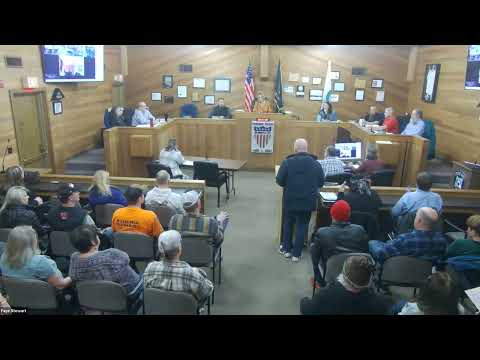
The Cottage Grove City Council voted 5–2 on Feb. 24 to deny Community Sharing’s request that the city transfer 12 small pallet shelters and one large pallet shelter for use as emergency warming shelters at the nonprofit’s site on Birch Avenue.
Community Sharing Executive Director Mike Fleck told the council his organization intends to operate warming shelters on extreme‑cold nights and asked the city to transfer the units so the nonprofit could install them on its property. “We believe this is a critical service needed in our community to prevent our unhoused neighbors suffering, extremely cold nights outside,” Fleck said during his presentation.
Councilors and dozens of residents questioned whether Community Sharing had consulted neighbors, how the site would be operated and whether the program could expand beyond temporary warming nights. Councilors repeatedly raised concerns about outreach, public safety and the limits of the nonprofit’s capacity to operate a more permanent shelter program.
The council took public comment for more than an hour. Speakers were sharply divided: some residents near the proposed site described repeated nuisance and safety issues they attribute to nearby illegal camping, while volunteers and former shelter workers urged keeping the long‑standing community practice of operating emergency warming beds for very cold nights. Several speakers described shelter operations they had previously participated in as orderly and life‑saving.
Fleck described the nonprofit’s recent experience: volunteers ran warming operations nine nights this winter, serving 28 unduplicated individuals for a total of 95 shelter stays, and he said Community Sharing has about 35 volunteers signed up to help. He also said the organization lacks dedicated funding and plans to rely on volunteer labor and reserves to operate only in extreme weather. Fleck told councilors the agency plans to operate under state shelter provisions and noted the program’s activation threshold is 29 degrees Fahrenheit or colder.
Opponents pressed for neighborhood outreach and said previous sheltering efforts near residential areas had contributed to litter, theft and other problems. The police chief told the council of a recent uptick in illegal camping, littering, theft, burglary and vandalism in the area adjacent to Community Sharing and the nearby hospital. Several residents from Sunrise Estates and surrounding blocks said they had experienced property impacts they attributed to nearby camping.
Council debate focused on two central issues: (1) whether it was appropriate to transfer city‑owned pallet shelters to a private nonprofit for use on private property, and (2) whether the proposed use could be reliably limited to short‑term warming nights. Councilors who supported denying the transfer cited the applicant’s inability to commit to enforceable limits that would prevent expansion beyond emergency warming. Councilors who opposed denial urged more time for council review and community discussion at the council’s March retreat.
Action: Councilor Lammerman moved to deny Community Sharing’s request to transfer the pallet shelters; the motion passed 5–2.
The council majority voted to keep the pallet shelters in city possession and to defer further policy work on warming shelters to the council’s upcoming goal‑setting session and retreat, where members said they will consider ordinances and other safeguards for neighborhoods and businesses.
Community Sharing said it will continue to operate ad hoc warming shelter activations regardless of the council’s decision and invited councilors to tour its site. The council majority asked staff to include the subject on the council retreat agenda for broader policy discussion and potential ordinance drafting.