Get Full Government Meeting Transcripts, Videos, & Alerts Forever!
Get email alerts on the Artificial Intelligence Deepfakes topic
No spam. Unsubscribe anytime.
Lawmakers introduce HB 566 to bar unauthorized AI-generated uses of voice and likeness
Summary
Leader Hong presented HB 566, the "No Fix Act," to a House committee to prohibit use of unauthorized AI-generated voice and visual likeness, create a Secretary of State registry for deceased artists and impose civil penalties; committee members asked questions and two supporters were scheduled to testify virtually.
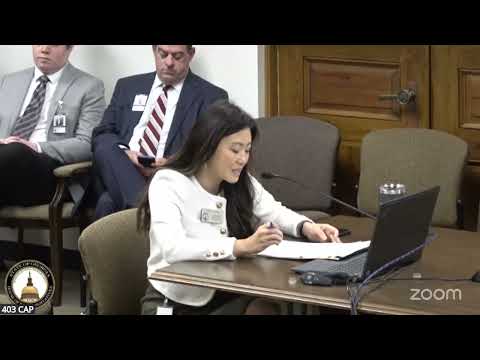
Leader Hong, the bill's author, told a House committee that she introduced HB 566, the "No Fix Act," to prohibit unauthorized computer-generated recreations of an individual's voice or visual likeness and to create a registry for deceased artists at the Secretary of State.
The bill, officially called the Nurture Originals Foster Art and Keep Entertainment Safe Act, would define protected uses of voice and visual likeness, make online platforms potentially liable if they have "actual knowledge" of unauthorized AI-generated content and do not remove it, and establish civil penalties for violations. Leader Hong described the measure as bipartisan and said it is intended to protect artists as generative AI tools become more widely used.
Leader Hong cited recent examples she said informed the measure: an AI-created song posted online that used voices resembling Drake and The Weeknd, and a separate advertisement in which an AI-generated likeness of actor Tom Hanks appeared in material he had not endorsed. "AI has opened new worlds of creative opportunities," Leader Hong said, "but these tools can allow users to exploit another person's voice or visual likeness by creating highly realistic digital replicas without permission."
She told the committee the bill includes a Secretary of State registry so people seeking permission to use a deceased artist's voice or likeness can find contact information. The measure would not categorically ban AI-generated works but would require permission before using a person's protected voice or visual likeness, Leader Hong said. She also said the committee should have a committee substitute labeled "SLC 590126S."
Chairman (unnamed) and at least two committee members asked questions during the presentation. One committee member asked, "I'm just curious how much the Drake video raised before they realized what was going on, and where did that person that faked it get to keep the money?" Leader Hong replied she did not know and said the virtual witnesses would likely have more information.
Leader Hong told the committee she had "two people that will be appearing virtually" in support of the bill who could help answer technical questions about AI and enforcement. No formal vote or committee action on HB 566 was recorded during the portion of the hearing represented in the transcript; the bill was presented and the committee took questions and planned to hear additional testimony.
Notes: The sponsor identified the measure as bipartisan and described civil penalties, platform liability tied to "actual knowledge," and a Secretary of State registry for deceased artists. The committee substitute identifier referenced by the sponsor was "SLC 590126S."