Get Full Government Meeting Transcripts, Videos, & Alerts Forever!
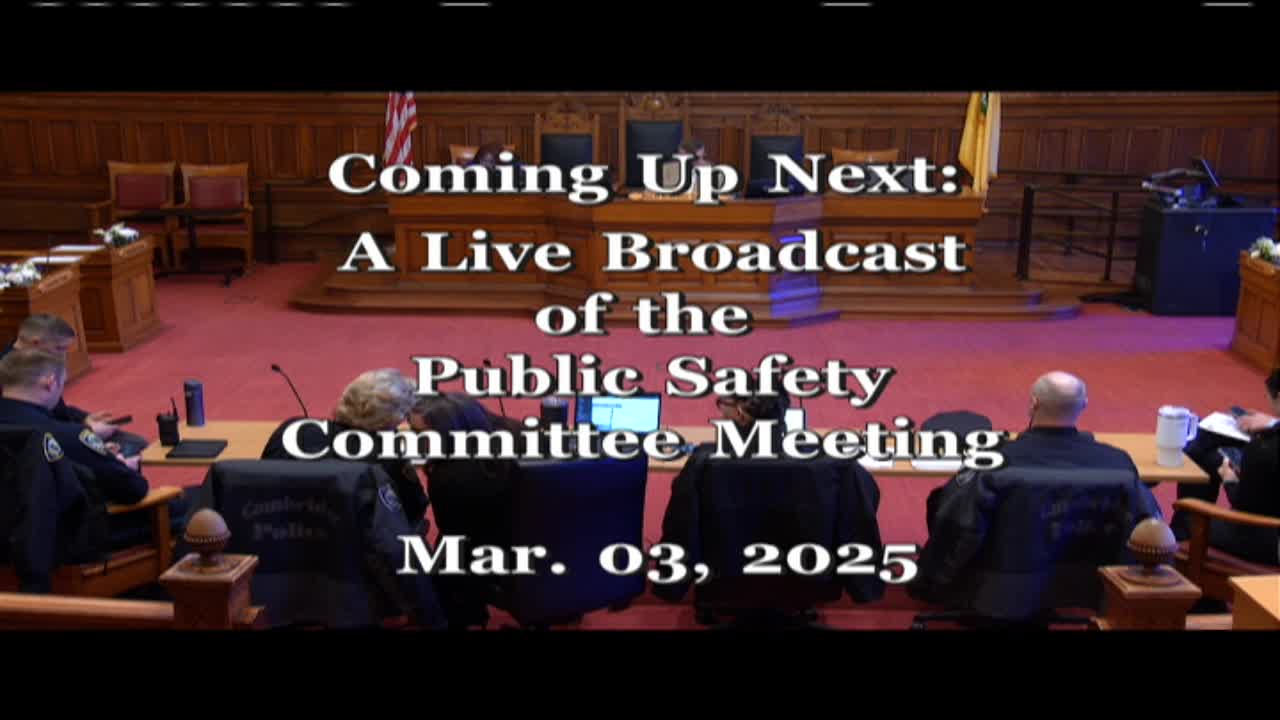
Cambridge committee hears sharply divided testimony on police drone plan, votes to refer STIR back to full council
Summary
The Cambridge City Public Safety Committee on Monday reviewed the Cambridge Police Department’s Surveillance Technology Impact Report (STIR) proposing use of remotely piloted aerial vehicles (RPAs) and heard hours of public comment before voting to refer the matter back to the full City Council for further work on policy details and legal authority.
The Cambridge City Public Safety Committee on Monday reviewed the Cambridge Police Department’s Surveillance Technology Impact Report (STIR) proposing use of remotely piloted aerial vehicles (RPAs) and heard hours of public comment before voting to refer the matter back to the full City Council for further work on policy details and legal authority.
Committee members, police officials, civil liberties advocates and residents debated whether the department should receive permission now to operate drones for limited uses — such as search-and-rescue, tactical overwatch of barricaded suspects and accident reconstruction — or whether the council must first see a binding, written policy that constrains how footage is collected, stored and shared.
Why it matters: supporters said drones could speed lifesaving searches and reduce risks to officers during high‑risk entries; opponents warned the aircraft would expand aerial surveillance of protests and everyday public life without enforceable limits. Several councilors and the ACLU urged a concrete policy — not only assurances in public remarks — before the council grants long‑term approval.
Cambridge Police Commissioner Christine Elo opened the department’s presentation by saying the agency seeks “to harness drone technology as a safety and operational tool while maintaining rigorous safeguards to protect our privacy and civil [liberties],” and stressed that drones would not be armed and would not capture audio. Elo said drones would not record unless the operator “press[ed] the record button,” and that each recording would be documented in a police report.
Detective Krista Casenza, a licensed Federal Aviation Administration drone pilot assigned to the Special…
Already have an account? Log in
Subscribe to keep reading
Unlock the rest of this article — and every article on Citizen Portal.
- Unlimited articles
- AI-powered breakdowns of topics, speakers, decisions, and budgets
- Instant alerts when your location has a new meeting
- Follow topics and more locations
- 1,000 AI Insights / month, plus AI Chat