
Committee hears unified pitch for mediation and collaborative‑law uniform acts; judiciary raises technical questions
Get AI-powered insights, summaries, and transcripts
Subscribe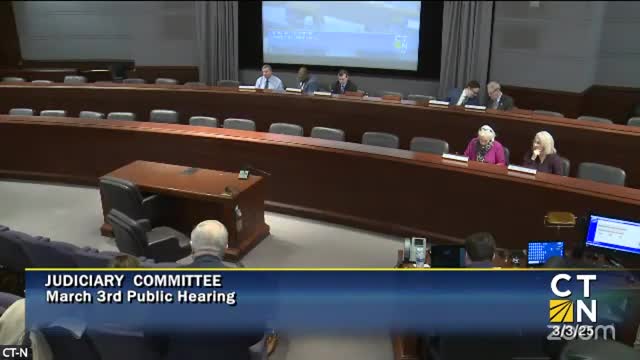
Summary
A broad group of mediators, retired judges, therapists and lawyers told the Judiciary Committee that two uniform bills — the Uniform Mediation Act (HB 6,971) and the Uniform Collaborative Law Act (SB 1,283) — would strengthen confidentiality protections and clarify consumer protections for out‑of‑court dispute resolution.
Multiple lawyers, judges and dispute‑resolution practitioners testified in favor of adopting the Uniform Mediation Act (House Bill 6,971) and the Uniform Collaborative Law Act (Senate Bill 1,283), saying statutory clarity would protect confidentiality, set consistent practice standards and help consumers choose alternative dispute resolution (ADR) options.
Mark Donald (Catalyst CT), Judge Douglas Mintz (ret.) and others described the Uniform Mediation Act as strengthening mediation confidentiality and privilege rules, identifying privilege holders, and requiring mediator disclosures of qualifications and conflicts. Proponents said the act would bolster parties’ confidence that candid mediation communications remain protected and that mediators meet minimum standards.
Supporters of the Uniform Collaborative Law Act — including practitioners who provide collaborative family law services and mental‑health professionals who serve as co‑parent counselors — emphasized the model’s child‑protection and consumer‑protection benefits. Jill Bix and Dr. Elizabeth Thayer said collaborative teams (lawyers, mental‑health professionals and financial neutral experts) give families structured support and can reduce litigation and long‑term harm to children when the process succeeds.
The judicial branch and the probate administrator asked for technical clarifications and narrow carve‑outs. Probate court staff flagged their existing Rule 21 mediation program (retired and sitting judges mediating probate contested matters) and asked that the statute not unintentionally disrupt that program; the probate administrator recommended a narrow carve‑out or language alignment. The judicial branch raised questions about how the bills treat mediations conducted by sitting judges, and some committee members pressed proponents on whether a non‑lawyer designated by a party “to accompany and participate” in mediation could trigger unauthorized‑practice‑of‑law concerns. Proponents said the intent is to allow support persons (spouses, family, guardians) to accompany participants and that the acts already carve out exceptions such as allegations of child abuse or professional misconduct.
Committee members asked proponents to work with the judicial branch on technical tweaks; no final votes were taken.