Get Full Government Meeting Transcripts, Videos, & Alerts Forever!
Get email alerts on the Audit And Oversight topic
No spam. Unsubscribe anytime.
Committee adopts substitute and advances bill to create Office of Government Efficiency within Auditor's office
Summary
The committee adopted a substitute and passed Senate Bill 257 to authorize an Office of Government Efficiency inside the Office of the Auditor of Public Accounts to perform performance audits and recommend efficiency measures; committee recorded 9 yeas and 1 pass.
The Senate State and Local Government Committee voted to adopt a committee substitute and advance Senate Bill 257, which would create an Office of Government Efficiency inside the Office of the Auditor of Public Accounts to conduct performance audits, fiscal and operational reviews, and recommend efficiency practices across state government.
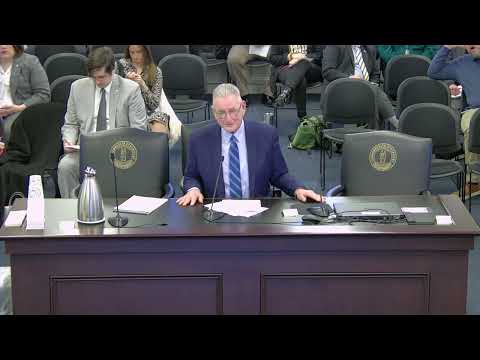
Senator Lindsey Tichenor, sponsor of SB 257, and Kentucky State Auditor Allison Ball outlined the proposal. Ball said the authority to perform performance audits already exists in the auditor's office but has been used intermittently; SB 257 would institutionalize and expand that function. Ball described performance audits as governed by auditing standards and said the office would work with the existing Special Exams unit, which she described as a "small office" doing targeted work now.
The committee adopted a substitute to provide initial funding authority from the auditor's restricted funds for fiscal year 2025-26 and discussed how additional staffing would be phased in. Ball told the committee the measure would not request appropriations this year; instead it would permit the office to expend more of the restricted funds the auditor's office already generates from audit work. Ball estimated a minimal initial staff and suggested the office might duplicate the current Special Exams staffing of three full-time and three part-time positions to start but said final staffing needs will be clearer after implementation.
Sen. Herron asked about overlap with existing legislative investigatory committees that have subpoena power; Ball and others responded that the auditor's authority to perform audits already exists and that SB 257 would make performance auditing a continuous office responsibility rather than an ad hoc activity. Members asked about fiscal impact, the number of positions needed, and how specific audits would be selected; Ball said audits would be driven in part by requests and the auditor's judgment and that the office expects to seek appropriations in the next budget cycle if needed.
During final action the committee recorded nine yays and one pass; the chair said the bill "passes" and is expected to follow the same path on the Senate floor.
The bill establishes auditing and reporting duties for the new office and would give the auditor authority to hire additional staff, to expend restricted funds as authorized, and to seek appropriations and federal grants to support performance-audit work.