Get Full Government Meeting Transcripts, Videos, & Alerts Forever!
Get email alerts on the Conscience Protections Healthcare topic
No spam. Unsubscribe anytime.
Senate committee advances bill to protect health‑care workers' conscience objections; opponents warn of care gaps
Summary
The Kentucky Senate Health Services Committee voted to advance Senate Bill 132, a measure creating individual conscience protections for health‑care professionals. Supporters framed it as a recruitment tool; medical providers and advocacy groups warned it could allow denial of care and worsen access in rural areas.
Senate Bill 132, a proposal to create individual conscience protections for health‑care professionals, passed out of the Kentucky Senate Health Services Committee after testimony from supporters and opponents and a roll call vote by committee members.
Supporters said SB 132 would protect health‑care workers who decline to perform specific procedures that violate their deeply held religious or moral beliefs and would help recruit clinicians to the state. "This bill is not a challenge to the social structure. It is not a policy bill. ... What this bill is, it is a recruitment tool," State Senator Donald Douglas (District 22) told the committee as he introduced the measure.
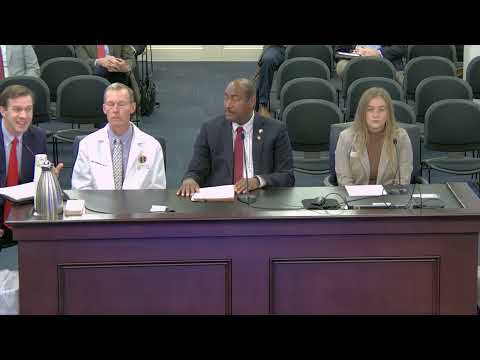
Proponents included emergency medicine physicians and nurses who said workforce shortages and maldistribution of specialists are harming patient access. Bill Wurman, an emergency room physician who described staffing and specialist shortages, said emergency departments "are gonna get care" for patients but that the bill would help attract more qualified professionals to Kentucky. Registered nurse Lindsey Cox said lack of conscience protections influenced her choice of specialty and career options.
Opponents — including pediatricians, obstetricians, nurses, social workers and advocacy groups — said the bill could allow refusals of routine care, create delays or force patients in rural areas to travel or forgo treatment. Dr. Karen Abrams, a pediatrician, told the committee the bill could permit denial of services such as prescribing contraceptives or even signing in a patient, and that those denials would be particularly harmful where alternatives are scarce. OB‑GYN Caitlin Thomas warned that refusal or withholding of information could delay care and worsen outcomes.
Several witnesses said the bill lacks safeguards to ensure continuity of care or to require hospitals to reassign staff who object. David Conway, a registered nurse and ordained minister, said the bill could prevent supervisors from reassigning staff who object to a procedure, creating safety risks. Chris Hartman of the Fairness Campaign and Tamara Weider of Planned Parenthood argued the measure could enable discrimination and would not address underlying recruitment and retention problems.
Supporters told the committee the bill would not apply to emergency care, which they said is governed by federal law. An Alliance Defending Freedom representative, Greg Chaflin, and other backers said comparable laws exist in other states and that they are rarely invoked.
After public testimony and questions from senators, the committee recorded votes. The committee chair called the question and announced the bill passed with a favorable recommendation.
The committee debate highlighted competing priorities: supporters emphasized individual conscience rights and recruitment of clinicians; opponents emphasized patient safety, continuity of care and access, especially in rural communities where provider options are limited. Several senators asked for tightened definitions of "moral" or "ethical" principles in the bill language before later stages.
Votes at a glance: the committee recorded multiple aye votes, one recorded no vote, and one committee member recorded a pass (abstention); the chair announced the bill passes out of committee with a favorable recommendation.
The bill will proceed to further consideration in the Senate. No statutory or regulatory changes beyond those in the bill text were enacted by the committee; the transcript shows proponents and opponents asked for clarifying amendments and for tighter definitions on some terms.