Get Full Government Meeting Transcripts, Videos, & Alerts Forever!
Get email alerts on the Education topic
No spam. Unsubscribe anytime.
Senate committee clears School Innovation Act creating voluntary waivers for schools
Summary
Senate Bill 207 would allow districts to contract three-year "schools of innovation" with waivers from specified state regulations; the committee passed the bill 11-0 after debate about eligibility, fiscal impact and safeguards to prevent student "cherry-picking."
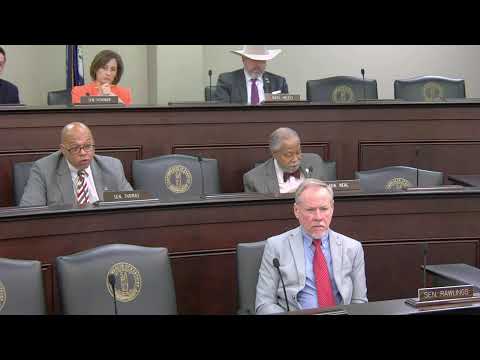
FRANKFORT, Ky. — The Senate Education Committee on Monday unanimously approved Senate Bill 207, the "School Innovation Act," which would create a voluntary waiver process for public schools to operate as three-year "schools of innovation" under contracts approved by the Kentucky Board of Education.
Sponsor Senator West said the option is intended to give districts a tool to try new approaches at underperforming schools or to provide flexibility for high-performing campuses. "This bill allows district leadership to say, this school in its current form is failing our kids and parents, and we need to try something different," West said during the committee presentation.
Under the bill, districts may apply to the state board for waivers from listed administrative regulations; the bill also lists specific regulations that would not be waivable. Contracts would run three years and the district would retain ownership of school facilities and responsibility for transportation and SEEK funding flows.
Senator West and witnesses cited examples from other states, including South Carolina and Indianapolis, and said districts could also attract private philanthropy to supplement school resources under an innovation contract.
Committee members sought details on eligibility, fiscal effects and student assignment rules. Senator Thomas asked whether the bill is limited to chronically low-performing schools; West replied the bill does not limit eligibility to a particular performance band and that any district could use the option if it chose. Senator Thomas said he could see potential value for high-performing schools as well.
On student access and enrollment concerns, Senator Givens flagged a drafting question about whether the bill should explicitly say "notwithstanding any law to the contrary." He asked whether innovation schools could avoid open-enrollment obligations. West answered that the legislation is not intended to allow "cherry-picking" of students and that existing law and board policies governing admissions would continue to apply. "We don't wanna cherry pick kids," West said.
Committee members asked about fiscal implications. West said the fiscal note is indeterminate because costs depend on how many districts participate. He told the committee that state SEEK funding and local taxes would continue to flow through districts and that district-owned buildings and transportation responsibilities would remain with the district.
Senator Givens, who said the bill provides more latitude than the older "districts of innovation" statutory language, asked staff to check a cross-reference: Section 11 repeals the district-of-innovation provisions in existing statute so that the new school-level authority can be used instead. "You're providing, in my mind, even more latitude," Givens said.
Motion and vote
Senator Givens moved to report the bill favorably; Senator Wise seconded. The committee passed SB 207 by recorded vote; the chair announced, "Bill passes 11. No nays."
What the bill would do (clarifying details)
- Establish a new waiver and contract option for individual public schools to become "schools of innovation" for three-year terms under Kentucky Board of Education approval. - Preserve district ownership of school buildings, transportation responsibilities, and state SEEK funding flows; the district retains authority to terminate contracts for cause, including financial misconduct. - Identify regulations that cannot be waived and require procedural guardrails for application and approval. - Repeal prior "districts of innovation" statutory language (Section 11) to replace that mechanism with school-level innovation contracts.
Evidence of outcomes from other states
Sponsor testimony cited evaluations and examples from South Carolina and Indianapolis that show positive student-growth outcomes in some innovation schools, while noting the evidence base is limited and results vary by implementation.
Next steps
SB 207 reported favorably from committee and will move to the Senate floor; committee members asked staff to confirm cross-references and drafting details before floor action.