Get Full Government Meeting Transcripts, Videos, & Alerts Forever!
Get email alerts on the Law Enforcement Secondary Employment topic
No spam. Unsubscribe anytime.
Kentucky Senate committee clears bill allowing State Police to take secondary employment
Summary
The Senate Veterans, Military Affairs and Public Protection Committee unanimously approved legislation to permit Kentucky State Police troopers to accept secondary off‑duty employment, with the KSP commissioner to set implementing policy.
Senate Bill 266, a measure to allow Kentucky State Police troopers to take secondary off‑duty employment, was approved unanimously by the Senate Veterans, Military Affairs and Public Protection Committee after sponsor Senator Aaron Reed said the change would boost morale and aid recruitment and retention.
Senator Aaron Reed, sponsor and a Republican from District 7, told the committee the bill is “long overdue” and would let troopers “supplement their income.” Reed said the bill would not remove managerial control from the department: “the commissioner will be, you know, the buck stops there. So it's gonna be up to the commissioner to develop that policy,” he said.
The measure would create a statutory framework permitting secondary employment for troopers; Reed said the specific parameters (hours, types of outside work and pay rates) would be set by the Kentucky State Police commissioner through department policy. During questions, Senator Higdon asked whether the bill had the commissioner’s blessing. Reed said he had not spoken to the commissioner directly but had discussed the concept with other members of the department leadership and emphasized the bill defers policy detail to the commissioner.
Senator Nunn, who described prior experience hiring off‑duty officers in private security work, supported the bill and said off‑duty troopers’ training and arrest powers can make them especially useful to employers seeking security services. Senator Boswell joined the discussion and asked how typical secondary shifts might be scheduled; Reed suggested examples such as events at convention centers and the Kentucky Derby where other officers earn substantial hourly rates.
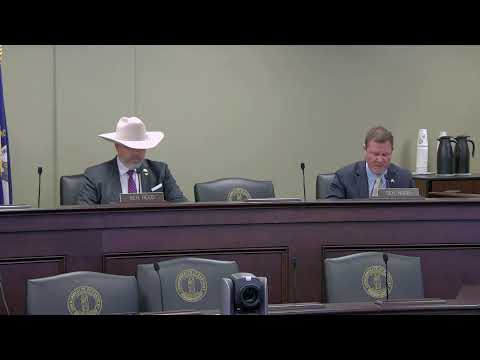
A motion to advance the bill was made by Senator Boswell and seconded by Senator Richardson. The committee recorded unanimous support during a roll call: Senators Boswell, Higdon, Nunn, Reed, Richardson, Tichenor and Chair Deneen voted aye. The committee chair announced the bill “passes unanimously” and that it would move to the full Senate floor.
The bill’s sponsor and committee members framed the proposal as a recruitment and retention tool and said implementation details will be handled in department policy rather than in statute. No related statutory citations were referenced on the record.