Get Full Government Meeting Transcripts, Videos, & Alerts Forever!
Get email alerts on the Senior Services topic
No spam. Unsubscribe anytime.
Visiting Neighbors warns of growing need for home-based senior services in Community Board 2 area
Summary
Visiting Neighbors told Community Board 2’s Human Services Committee that its clients are older, lonelier and in greater need of in‑home support; the nonprofit said it serves about 1,000 people with a small staff and asked the board to advocate for funding.
Visiting Neighbors, a longtime volunteer-based senior services nonprofit, told the Human Services Committee of Community Board 2 that demand for in‑home services is rising as clients grow older and live longer.
"We are getting older and we are living longer," said Cynthia Mauer, executive director of Visiting Neighbors. "The average age of our client is 90. A third of our clients are over the age of 90." Mauer told the committee many of the group’s clients live alone and lack nearby advocates or caregivers.
The presentation outlined why the organization’s work matters to the neighborhood: Visiting Neighbors matches volunteers with older adults for companionship, accompaniment to appointments, and limited practical help such as banking or postage. The group also provides health advocacy — checking that seniors understand discharge instructions, helping ensure hospital staff know someone is watching, and encouraging seniors to ask medical questions. Howie Square, coordinator for Visiting Neighbors, described volunteer matches and emergency support used during the COVID pandemic.
The nonprofit said it directly provides services rather than formal case management and relies on a small paid staff and a large volunteer corps. Mauer said Visiting Neighbors has four full‑time staff, about 250 volunteers who provide regular direct service and roughly 100 additional volunteers who help seasonally or for emergencies. She said the organization serves about 1,000 people across the area roughly described as 30th Street river to river down to South Ferry.
Budget and funding were a recurring focus. Mauer said the organization’s annual budget is about $350,000. She described its current revenue mix as roughly one‑third from private foundation grants, about one‑third from individual contributions, and slightly less than one‑third from city council discretionary funding. She credited city discretionary funds for keeping the group operating and said borough and council support has varied over recent years.
Committee members asked about program details and capacity. Mauer said Visiting Neighbors runs a "friendly visiting" program, intergenerational matches, shopping escorts, appointment accompaniment, and a small emergency‑needs fund to buy things such as a mattress or a fan. She said volunteers are trained to be observant and to escalate concerns but are not clinicians; the group does not take clients with Alzheimer’s for ongoing care because volunteers are lay people, not professional caregivers.
Mauer described operational practices: in‑home assessments that can take two to three hours; a protected database for client information; a policy requiring that the senior request services themselves (a family member may assist in making the call); and outreach such as fact sheets and appearances at resource fairs. She said Visiting Neighbors follows CDC guidance from the pandemic period and treats privacy protections seriously.
Speakers emphasized outcomes and qualitative benefits: the group reported that its "special occasions" and holiday programs reduced hospitalization spikes that had occurred historically during holidays, and that companionship and practical help reduced avoidable emergency visits. Mauer described creative pandemic‑era responses such as volunteers sourcing supplies when PPE was scarce.
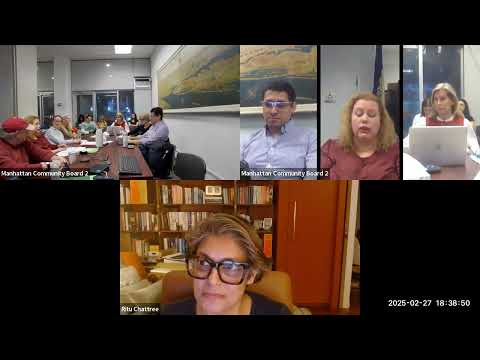
The committee did not take formal action. Members discussed ways the full board could support the nonprofit, including sharing its reports and advocating for steady discretionary funding. Ritu Chhatri, vice chair of the Human Services Committee, invited Visiting Neighbors to provide recent program reports to inform further consideration.
Visiting Neighbors provided the committee with contact information, a fact sheet and an offer to share its most recent twice‑annual report for further review. Committee members discussed placing the item on a future agenda for follow‑up and possible advocacy on funding stability.