Get Full Government Meeting Transcripts, Videos, & Alerts Forever!
Get email alerts on the Governor Budget topic
No spam. Unsubscribe anytime.
County staff outline governor's budget hits and next steps for Milwaukee County priorities
Summary
Jeremy Lucas of the Office of Strategy, Budget and Performance briefed the committee on which county budget requests were included, partially funded, or omitted in the governor's 2025‑27 executive budget and explained next steps in the legislative process.
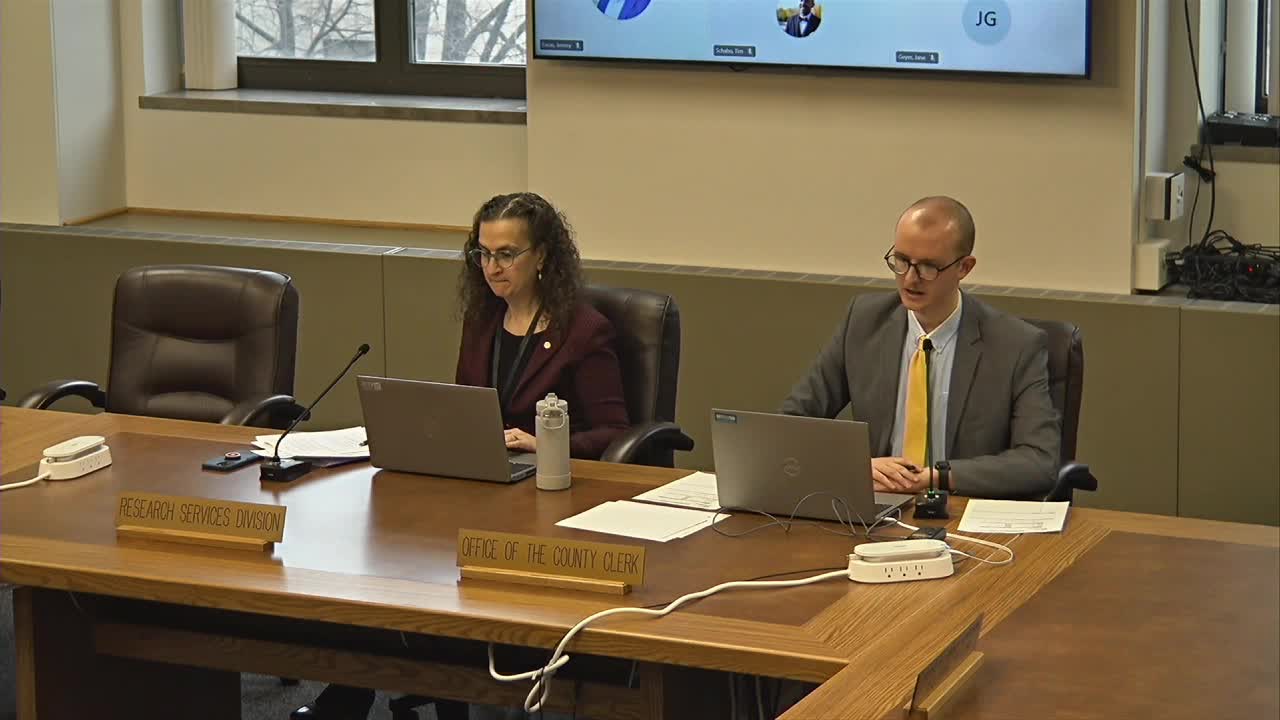
Jeremy Lucas, policy director in the Office of Strategy, Budget and Performance, told the Committee of Intergovernmental Relations on Monday that the governor's 2025‑27 executive budget is responsive to more than half of Milwaukee County's requests in varying degrees and summarized funding items that would affect the county if the legislature retains them.
Lucas walked the committee through a list of county requests and the governor's proposed funding: the county sought $32 million over the biennium to cover half of expressway patrol costs for the sheriff's office and the governor's proposal included about $16 million; the county requested an annual $14 million Medicaid funding increase and the governor's budget includes roughly $20–21 million annually; the county asked for $5 million annually for adult protective services and the executive budget provides about $7.6 million over the biennium. Lucas also said youth aids would see a 5% increase in 2026 and 2% in 2027 in the governor's plan, while some asks — including flexible rental assistance and additional gap financing for affordable housing — were not included.
Lucas described other positives in the executive budget, including formula increases for transit (general transportation aids and a separate 20% paratransit aid increase each year that matched one county request), a proposed transit capital assistance program with $20 million for vehicle replacement, and $200,000 over the biennium for Milwaukee County's Housing First program ($100,000 per year). The governor also recommended reauthorizing the Knowles‑Nelson Stewardship Program at $100 million per year through FY36, and proposed funding increases for aging and disability resource centers as well as $21.7 million for home‑delivered meals statewide.
Committee members asked about the bill's prospects in the legislature. Lucas said the governor's budget is a starting point: the Joint Finance Committee historically begins from base and may rework items, so county staff plan to use the executive budget as the county's advocacy platform and to engage legislators, including through statewide listening sessions and agency briefings. Lucas invited supervisors to participate in an ambassador day later in the month focused on health and human services and to coordinate with county staff on timing to support legislative outreach.
Supervisor Shea asked what realistic chance the items have given the Assembly leadership's comment that the governor's budget was "dead on arrival." Lucas said that while the governor's package signals what the governor will support and is unlikely to be vetoed if retained, joint finance and the legislature begin work independently and the county must continue outreach to secure items through the process.
Lucas' presentation covered a broad set of line items; in his assessment, the governor's proposal responded to over 50% of the county's requests in some form but left gaps the county will continue to press in the legislative process. The committee did not take votes on policy changes during the briefing; the session was an informational update.