Get Full Government Meeting Transcripts, Videos, & Alerts Forever!
Get email alerts on the Election Legislation topic
No spam. Unsubscribe anytime.
Harrisonburg elections director outlines General Assembly bills that could change local voting procedures
Summary
The city’s director of elections reviewed multiple bills passed out of the General Assembly that would alter deadlines, reporting, removal authority for electoral board members and other processes affecting local election administration.
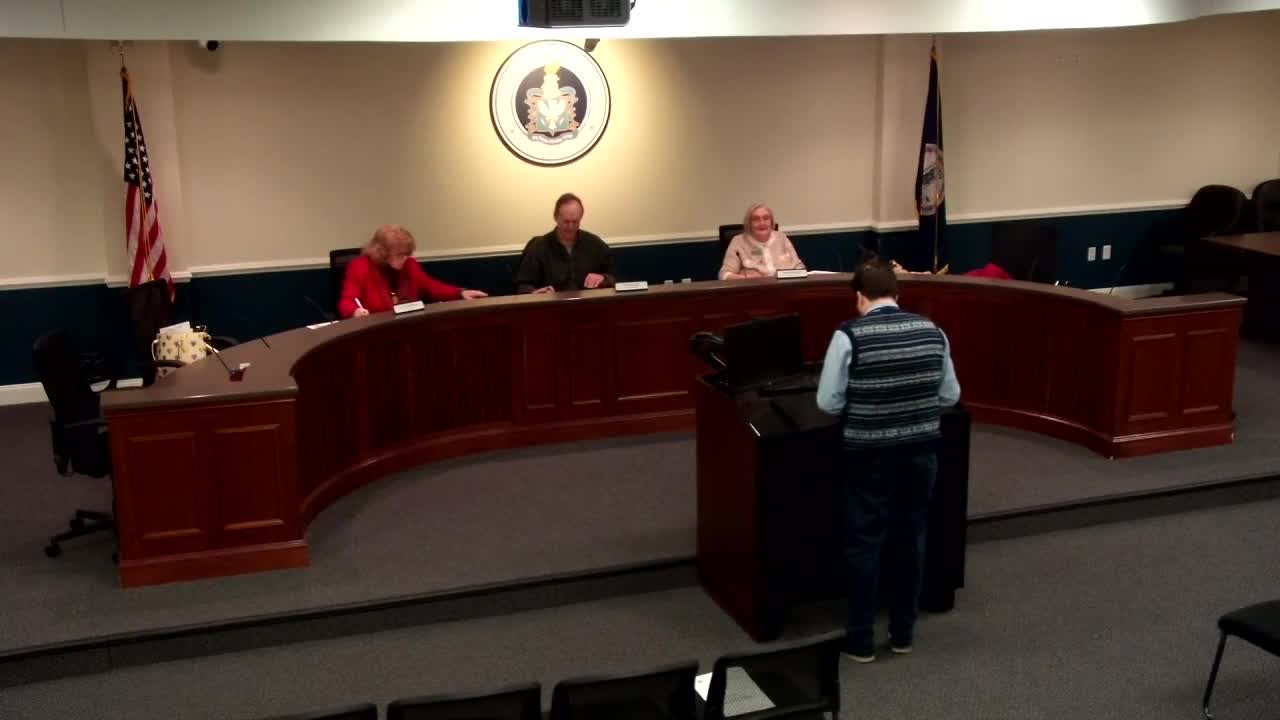
The director of elections for Harrisonburg reported March 3 that multiple bills moving through the 2025 General Assembly could change how the city runs elections, from absentee-ballot deadlines and precinct reporting to who can remove local electoral-board members.
"We have a few things to go over," the director told the Harrisonburg Electoral Board, then summarized a slate of election-related measures that had cleared committees and were heading to the governor or further consideration. The director said some measures had bipartisan support while others were expected to face uncertainty or a gubernatorial veto.
Why it matters: several bills would shift operational timelines or transfer authority away from local electoral boards, with potential effects on staffing, workloads and post-election reporting. The director cautioned that some changes could require more staff time or new procedures if enacted.
Key bills and local impacts described by the director:
- Close-of-books reduction: A bill discussed would reduce the voter-registration "close of books" window from 21 days to 10 days. The director said the longer period dated to the era of printed poll books and that the shorter window may help with same-day registrations during early voting but likely would not be transformational.
- Primary-date consolidation: HB 1794 / SB 119 (as referenced in the meeting transcript) would move the June primary to March in presidential years so those years have a single March primary. The director said the change could require candidates to begin signature gathering earlier and could face implementation concerns for local and statewide campaigns.
- Authority over satellite early-voting hours: One bill would move authority to set hours for absentee (early-voting) satellite offices from the locality's electoral board to the local governing body (city council or board of supervisors). The director noted Harrisonburg currently has no satellite office but recalled prior discussions about a satellite on the JMU campus.
- Certification and penalty clarifications: A bill (referred to as HB 2277 in the transcript) would codify that certification of local elections is the electoral board's main responsibility and would impose a civil penalty (described in the discussion as $1,000) for failure to certify. The director said the legislation also clarifies that if a locality refuses or is unable to certify, the State Board of Elections would assume responsibility.
- Removal of EB/GR authority: HB 2668 (as described) would change the removal process for electoral board (EB) or general registrar (GR) officials, giving the State Board of Elections (SBE) — rather than courts — authority to handle removals. The director said the bill was prompted by a Franklin City situation and expressed concern that shifting removals from courts to partisan-appointed bodies could politicize what had been a judicial process.
- Absentee ballot receipt/cure deadline: SB 760 (as referenced) would extend the deadline for receiving absentee ballots and cure information from 12:00 noon on the third day after the election to 5:00 p.m. The director warned that a later deadline could force staff to work later on post-election processing, shifting meetings and certification schedules.
- Campaign finance appeals to SBE: SB 945 (as referenced) would let campaigns appeal locally assessed campaign-finance penalties to the State Board of Elections. The director said local offices currently have a clear, nondiscretionary penalty schedule under state code and expressed concern about being required to defend assessments at the state level.
- Provisional-vote reporting by precinct: S1044 (as referenced) would require provisional-vote results to be reported by precinct. The director said that would complicate current local practices (which treat provisional ballots as a separate reporting category) and could force changes in ballot design or processing if localities wish to preserve current workflows.
- List maintenance and match-criteria bills: The director summarized several bills tied to voter-roll maintenance, including proposals to change what data may be used for removals, to require list-maintenance tasks to be completed by specified deadlines, and to update match criteria used in automated matching systems. She noted many of these measures tie into federal NVRA questions and said some measures might not be signed.
- Federal SAVE Act and online registration: The director discussed federal proposals commonly described as the SAVE Act, noting that federal law would supersede conflicting state law. She warned that some federal provisions discussed by colleagues could complicate online registration or require stricter document matching (for example, complicating cases where someone changed their name since birth).
The director summarized other actions in the legislature — including a JLARC study of consolidating elections to federal election dates and a proposed Election Worker Appreciation Day — and said the State Board of Elections and local registrar associations were actively engaged on multiple items.
"It may require some changes and possibly, you know, more funds to be able to do some of this stuff," the director said, urging the board to monitor developments.
The board did not take any formal votes on the bills during the meeting; the director said the office would follow bills as they move toward the governor and would report back if changes require local action or additional resources.
Looking ahead, the director recommended continued monitoring and noted that some measures (the director identified provisional-reporting and the close-of-books reduction) seemed likeliest to be enacted based on committee movement.