Get Full Government Meeting Transcripts, Videos, & Alerts Forever!
Get email alerts on the Sound Barriers topic
No spam. Unsubscribe anytime.
Residents, legislators press DOT for fuller noise-barrier study after clear‑cutting disputes
Summary
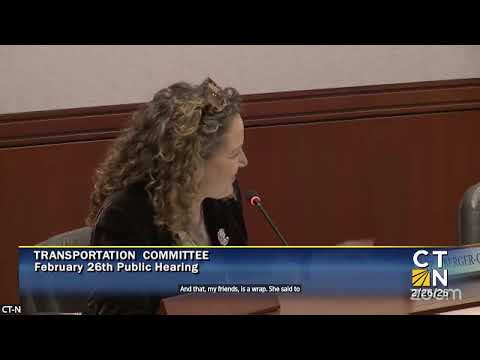
Residents and lawmakers urged the Transportation Committee to widen a state Type II highway sound-barrier program and to include vegetation impact analysis and more detailed prioritization, citing chronic noise along I‑95 and close-in residential development.
Hundreds of residents and several state legislators urged the Transportation Committee to expand a modest type‑2 highway noise-barrier program, press the Department of Transportation for a deeper, site‑level noise analysis and include vegetation management results before any decision to curb vegetative buffers near highways.
Residents’ testimony: Residents from coastal and urban neighborhoods said the constant highway noise has worsened over the years and described poor sleep and reduced quality of life. Multiple speakers said prior vegetation removals and selective clearings had not reduced highway noise and asked for concrete, local sound-barrier solutions. “The noise is heard 24 hours a day, seven days a week,” one resident said of the I‑95 corridor.
DOT response and study limits: DOT officials said the agency completed a statewide Type‑2 “heat map” noise study that identified priority locations but did not provide site-by-site engineering or topography-sensitive analyses. DOT staff asked for statutory clarity and additional funding to move from a broad heat map to detailed per‑site surveys, right‑of‑way surveys, surveys of property owners and design work.
Vegetation vs. barriers: Several legislators and residents noted the state’s concurrent vegetation studies — including carbon‑sequestration work — and argued vegetation alone is often insufficient to reduce decibel levels; DOT noted that hundreds of feet of dense vegetation are required to materially reduce noise and that in many cases engineered barriers are needed. Some lawmakers urged DOT to fold vegetation management results into any revised sound‑barrier prioritization.
Why it matters: The I‑95 corridor and other highways run close to dense residential neighborhoods in southern Connecticut, leading advocates to call for quicker, better‑targeted mitigation on projects already slated for reconstruction. DOT said its priority is repairing existing decayed barriers first and then completing detailed site analyses for new barriers if funding is available.
Ending: The committee asked DOT for site‑level cost estimates and recommended the department coordinate vegetation study results with barrier prioritization. Lawmakers said they want another, deeper study rather than a top‑level heat map so towns and residents can evaluate options for noise mitigation.