Get Full Government Meeting Transcripts, Videos, & Alerts Forever!
Get email alerts on the Public Safety Workforce topic
No spam. Unsubscribe anytime.
Lawmakers weigh uniform definitions for 'first responder' and 'essential worker' to include dispatchers and public‑works staff
Summary
Representative Jamie Foster and public‑safety advocates asked the committee to create a working group to develop statutory definitions of 'first responder' and 'essential worker' that would include 9‑1‑1 dispatchers and certain public‑works staff, aiming to align benefits, training and post‑incident support.
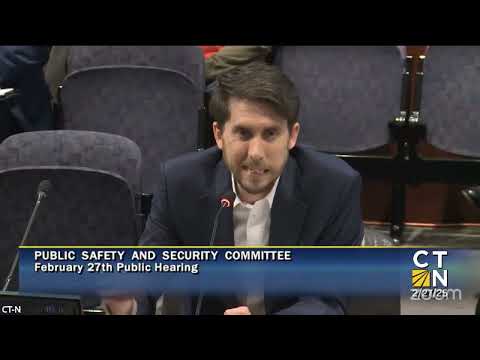
Representative Jamie Foster told the Public Safety Committee she will support House Bill 70 53, which would establish a working group to create uniform statutory definitions for "first responder" and "essential worker".
"Dispatchers are really an unseen lifeline," Foster said, describing dispatchers’ exposure to traumatic events and the work’s decisionmaking responsibilities.
Foster and others outlined reasons the legislature should clarify terms already used in different statutes: advocates for 9‑1‑1 dispatchers and some public works employees want consistent access to peer support, training, worker‑comp and other benefits that are not uniformly available because state law does not define who counts as a first responder or essential worker.
Witnesses asked for particular outcomes from the working group: common statutory language; a review of job classes to identify gaps in access to trauma counseling, critical‑incident support and specialized training; and recommendations for whether benefit changes should be administrative or legislative.
Supporters’ rationale
Representatives and union leaders said dispatchers are often exposed to the same traumatic audio and visual material as officers or EMTs on scene and need parity in mental‑health resources and training. Jamie Foster said the bill would help towns and agencies identify policy fixes that align with rapidly changing expectations for public‑safety support.
Fiscal and legal framing
Committee members noted the bill could open a broader set of fiscal and statutory issues — portal‑to‑portal coverage, eligibility for pension and workers’‑comp benefits — and cautioned the working group should prioritize narrowly defined goals to avoid unintended statutory consequences. Foster suggested the working group be used to craft narrowly targeted legislative fixes rather than an open‑ended reclassification across many statutes.
Ending
No vote was taken. Supporters said the working group would provide a practical path forward for dispatchers, public‑works employees and others seeking consistent workplace protections tied to emergency‑response duties.