Get Full Government Meeting Transcripts, Videos, & Alerts Forever!
Get email alerts on the School Safety topic
No spam. Unsubscribe anytime.
Debate over armed school security training: advocates seek broader, locally delivered curriculum; advocates for students urge limits
Summary
Law enforcement and some school officials told the Public Safety Committee that SB 1374 would improve the training and readiness of armed school security officers by allowing post‑approved curricula to be taught outside the central academy and by post‑approved instructors.
State and local law enforcement and some school officials urged the Public Safety Committee to approve a bill that would broaden and modernize training options for armed school security officers, while advocacy groups for students and disabled individuals warned the committee the measure could expand armed roles in schools without clear accountability.
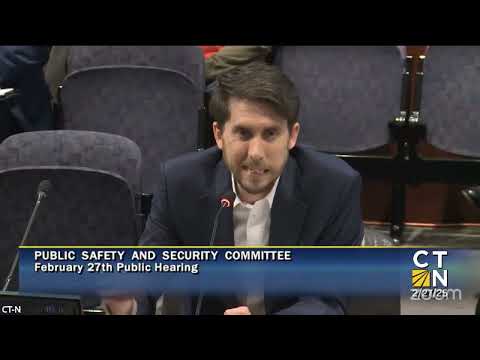
Officer Matthew Fauschian, a Burlington police officer assigned as a school resource officer, described practical limits in the current law that require security officers to take mandated training in Meriden at the post academy. He told the committee that allowing post‑approved curricula to be delivered at other locations and by post‑approved instructors would let districts train smaller, local teams with a focus tailored to school needs.
"There is no school to prison pipeline. That is a myth," Fauschian said, directly addressing a frequent critique of policing in schools and underscoring his view that security officers' primary role is to protect students from violent threats.
Proponents’ case
Supporters, including school resource officers and municipal police, said the bill would not lower standards but would let districts provide focused instruction — for example, active‑shooter response, legal case law about use of force, stop‑the‑bleed training and school‑specific emergency planning — in smaller groups with trainers who know the local response architecture. The bill would remove a requirement that currently mandates gang and drug recognition training as the statutory baseline and instead authorize a post‑approved curriculum developed for armed security officers.
Advocates for students and disability rights
Andrew Feinstein of SEEK and other speakers representing youth and disability advocates argued that expanding the pool of armed personnel in schools and widening where training can be offered risks placing poorly supervised, non‑sworn staff in daily roles with students. They recommended stronger limits, mandatory training in de‑escalation and disability awareness, and clear accountability provisions if armed personnel interact with students.
What the bill would change
SB 1374 would allow school districts more flexibility to deliver post‑approved training at locations other than the central police academy, and would create a pathway for post‑approved instructors and curricula tailored to the school environment. Supporters said the change could increase the number and quality of training offerings and reduce travel burdens on older, retired officers who currently staff armed security positions.
Questions and next steps
Committee members asked whether the bill would expand armed personnel in schools; proponents said the change merely expands where required training can be offered and allows curriculum development responsive to district needs. Opponents said the bill would need guardrails — such as mandatory de‑escalation, disability awareness, student‑rights protections and data collection on arrests and incidents — to avoid unintended consequences.
Ending
No vote was taken at the hearing. Lawmakers and advocates agreed on the need for training improvements but differed on whether the bill as written provides adequate safeguards for students with disabilities and others at elevated risk of school discipline disparities.