Get Full Government Meeting Transcripts, Videos, & Alerts Forever!
Get email alerts on the Public Health Department Package topic
No spam. Unsubscribe anytime.
Public Health Commissioner outlines five-bill package on fluoride, hospital diversion reporting, drinking water, statute revisions and physician recruitment
Summary
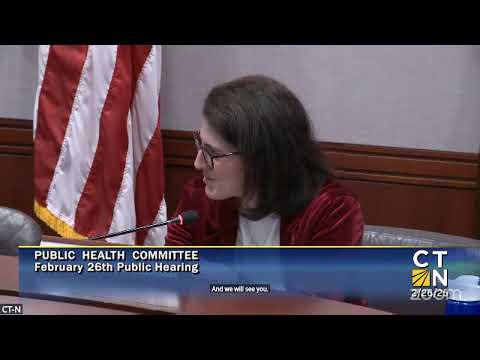
Department of Public Health Commissioner Manisha Jutani briefed the Public Health Committee on a five‑bill package that would codify the state’s current fluoride guidance, create reporting for hospital emergency‑department diversion, move some subsurface sewage regulatory duties to DPH with interim policy authority, streamline certain inspection schedules and create a limited retired‑physician license and a restored legal framework for a student loan repayment program.
Commissioner Manisha Jutani told the Public Health Committee that the Department of Public Health (DPH) is seeking five related statutory changes aimed mainly at maintaining existing public health standards and adding limited new administrative authority.
Jutani told lawmakers the package includes: (1) a food safety and oral health bill that would place the current federal guidance on community water fluoridation into state statute — with no increase in the 0.7 milligrams per liter guidance — so the state can “maintain the status quo”; (2) a hospital emergency department diversion bill to allow DPH to be informed when hospitals go on diversion so the agency can provide visibility and coordinate responses; (3) a drinking water bill tied to moving regulatory responsibilities for some larger subsurface sewage systems to DPH and authority for interim policies and procedures if regulations are delayed; (4) various statutory revisions to allow internal data sharing (for example, maternal death information), grant acceptance for advisory groups such as the Rare Disease Advisory Council, and limited flexibility in inspection schedules when federal and state inspection cycles conflict; and (5) a physician recruitment bill that would create a retired‑physician license for limited pro‑bono work in primary care and behavioral health and would restore statutory authority for a student loan repayment program should future funds be available.
Jutani said the drinking‑water provisions are intended to avoid a regulatory gap if the formal regulation approval process is delayed; DPH is aiming for a July 1 effective date for new regs but told the committee that the Regs Review Committee could reject them, creating a potential “limbo” for homeowners and installers. On emergency department diversion she emphasized DPH is seeking notification authority only — not permission to cause or deny diversion — so the agency can answer public and legislative inquiries and coordinate during system‑wide events such as behavioral health surges or cyberattacks.
On fluoridation, Jutani said the bill does not change policy or raise fluoridation levels. She noted the federal recommendation is 0.7 mg/L (with an allowable deviation of ±0.15 mg/L) and that neurotoxic effects described in some studies occur at substantially higher concentrations (studies noting risks are generally referring to levels around or above 2.5 mg/L). Dentists and public‑health dental groups testified in support of keeping statutory language tied to the federal guidance; they cited decades of evidence showing a roughly 25% reduction in decay in fluoridated communities and the practice’s role in reducing oral‑health disparities.
On physician recruitment, Jutani described the retired‑physician license as narrowly targeted to expand access by allowing retired physicians to provide pro‑bono services under an institution’s malpractice umbrella. The bill would not appropriate new funds for loan repayment but would restore the statutory framework should future federal or state dollars become available.
Committee members asked follow‑up questions about the timeline for drinking‑water regulations, DPH’s authority for interim policies and procedures, how the diversion notification would work during large‑scale catastrophes, and practical staffing needs to implement the subsurface sewage responsibilities transferred from DEEP to DPH. Jutani responded that DPH has requested staff capacity and that hospitals already submit emergency preparedness (COOP) plans to DPH, but hospitals are not required to report individual instances of emergency department diversion under current law.
The committee heard multiple supporting and clarifying voices during the hearing, including the Connecticut State Dental Association on fluoride, the Connecticut Water Works Association and the Connecticut section of AWWA on cross‑connection provisions and drinking‑water implementation, and hospital and provider groups asking for clarity on data and notification processes.
No formal votes were recorded during the public hearing portion reported in the transcript. Committee members indicated further meetings with DPH and other agencies were likely as the bills move through the process.