Get Full Government Meeting Transcripts, Videos, & Alerts Forever!
Get email alerts on the Nonprofit Funding topic
No spam. Unsubscribe anytime.
Nonprofit providers press legislature to index state contract rates to inflation
Summary
A broad cross‑section of Connecticut nonprofit human‑services providers told the Human Services Committee that Senate Bill 13‑58 should be amended to index state contract rates to inflation, saying years of underfunding threaten staff retention and service capacity.
A steady stream of nonprofit leaders and program directors told the Human Services Committee they support substitute language for Senate Bill 13‑58 that would index state contract compensation to inflation.
Speakers included Jennifer Chudukiewicz of the Southeastern Council on Alcoholism and Drug Dependence (SCAD), Robin Sharp of Easterseals, Becca Atkins of ArtReach, Len Cipollone of Easterseals Greater Waterbury, and Jennifer Gaines on behalf of the National Diaper Bank Network. Testimony spanned treatment providers, disability services, senior care advocates and arts organizations; all said state contract rates have not kept pace with years of rising costs and temporary or one‑time federal funds do not create sustainable programs.
Common points from witnesses:
- Historic underfunding: Organizations cited decades of compressed purchasing power. One summary estimate presented to the committee said nonprofit contract rates would need roughly a 45% increase to match 2007 buying power, whereas cumulative increases provided in recent years total about 15%.
- Workforce and turnover: Speakers said inadequate rates make it difficult to recruit and retain frontline staff such as direct‑support professionals, community health workers, clinicians and peer specialists. Several providers reported turnover rates far higher than historic norms and that vacancies force program reductions or waiting lists.
- Administrative burden and timing: Multiple providers urged clarifying the 30‑day payment language in SB 13‑58; organizations said a strict "30 days after delivery of service" rule could be administratively impossible because Medicaid contracts cover services delivered over time and invoicing can be monthly. Reliance Health and other providers said delayed or unpredictable payments mean they sometimes bridge payroll using lines of credit.
- Indexing as stability: Witnesses and the Connecticut Nonprofit Alliance argued indexing contract rates to a transparent inflation measure would allow organizations to plan, avoid last‑minute funding crises and keep staff paid competitively.
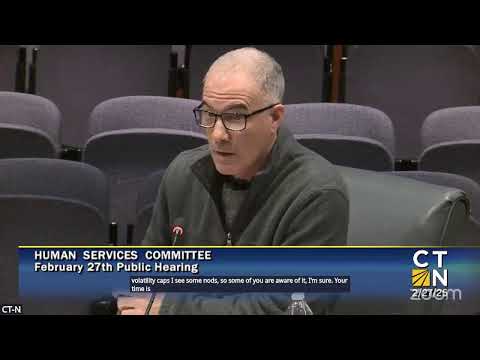
Committee members asked for more specifics on current payment timing, audit burdens, and possible guardrails or volatility caps if indexing is adopted. Nonprofit representatives said indexing should be paired with reasonable accountability and suggested quarterly reporting rather than unfocused audit bursts.
Why it matters: Connecticut’s contracted nonprofits provide core services for thousands of state residents. Witnesses told the committee that without a durable approach to keep contract rates aligned with real costs, service capacity will shrink, waiting lists will lengthen and staffing shortages will intensify.