Get Full Government Meeting Transcripts, Videos, & Alerts Forever!
Get email alerts on the Hemp Cannabinoids topic
No spam. Unsubscribe anytime.
House committee holds hearing on restricting delta-8 and other hemp-derived intoxicants
Summary
Lawmakers held a hearing on HB265, a substitute that would address delta-8 and similar cannabinoids derived from hemp. Supporters cited public-health concerns and the 2018 Farm Bill's 0.3% delta-9 threshold; the Department of Agriculture urged a comprehensive review before carving out specific cannabinoids.
The House Agriculture & Consumer Affairs Committee held a hearing on HB265 (substitute LC505550512S), legislation that would restrict the sale of delta-8 and other synthetically derived intoxicants made from hemp.
Representative Sainz, the bill's sponsor, told the committee the 2018 Farm Bill defined hemp as cannabis with less than 0.3% delta-9 THC and did not expressly address delta-8 and other cannabinoids. "This bill aims to eliminate delta-8 in hemp products within the state of Georgia," he said, describing concerns about synthetically amplified intoxicants produced from hemp-derived CBD.
Speakers in favor of restrictions included Michael Mumper of Georgians for Responsible Marijuana Policy, who explained product availability and potency concerns, and several parents and substance-use specialists who testified about youth exposure and addiction. One parent, Marty Ravinda, described a son who struggled with high-potency THC use and credited treatment with recovery; she urged lawmakers to "pass this bill to save our future generations from being mentally incapacitated because of... these products."
Dr. Greg Raducah, who said he has five decades of experience in substance-abuse prevention and treatment, told the committee that delta-8 products have proliferated in vape shops and convenience stores and called the legislation "very important."
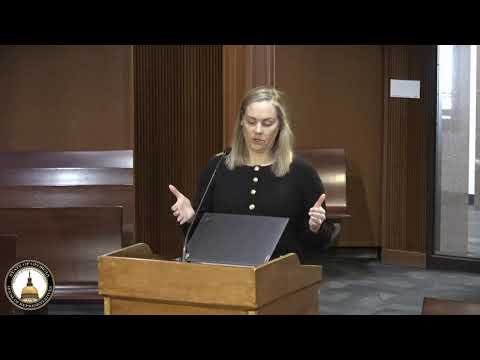
Catherine Russell, director of policy at the Georgia Department of Agriculture, briefed the committee on the department's regulatory work following last year's SB494, which gave the department authority to oversee hemp retail, wholesale and manufacturing markets. She said the department has completed two rounds of rulemaking, hired inspectors and begun testing but warned that the delta-8 issue is complex. "I actually don't think it's a loophole. I think that it's a policy that has not yet been considered by the [legislature]," she said, and cautioned that banning one cannabinoid could push producers toward other, potentially riskier synthetics such as HHC.
Witnesses and staff described testing challenges: the department said many products marketed as delta-8 test as delta-9, that potency and contaminant profiles vary, and that some profiles show spikes for heavy metals on products made via chemical processing. Supporters pointed to other states and an attorneys-general letter asking Congress to close the perceived delta-8 loophole.
Committee members heard the testimony but took no final action; the meeting record shows HB265 was a hearing-only item. The sponsor and department agreed that additional study and targeted policy language may be needed to address the range of hemp-derived cannabinoids and to avoid pushing consumers toward untested alternatives.
No vote was taken on HB265 during the session.