Get Full Government Meeting Transcripts, Videos, & Alerts Forever!
Get email alerts on the Homelessness Policy topic
No spam. Unsubscribe anytime.
Savannah interagency council unveils five‑year strategic plan to prevent and end homelessness
Summary
The Savannah‑Chatham interagency council presented a five‑year strategic plan aiming for ‘functional zero,’ an adopted encampment management policy and a request that council back state legislation clarifying local governance of homelessness programs.
The Savannah Chatham County Interagency Council on Homelessness (ICH) presented a five‑year strategic plan to the Savannah City Council and asked the council to support state legislation that would formally recognize the local ICH structure and amend the language governing the Chatham Savannah Authority for the Homeless.
Stephanie Capel, executive director of the Savannah Chatham County Interagency Council on Homelessness, said the plan’s vision is to achieve "functional zero" — making homelessness rare, brief and non‑recurring — and described six goals that together target prevention, shelter capacity, workforce and policy alignment.
Capel said the planning process began in September 2023 and included five phases of work with data reviews and community engagement. The plan incorporated input from 65 key stakeholders and 51 frontline workers, surveyed about 105 people experiencing homelessness and held focus groups that included 23 families. "We put the voice of those who are experiencing homelessness at the front of our work," Capel said.
Six strategic goals and next steps - Establish an integrated system to prevent and end homelessness, including strengthening the ICH governance role and the lead agency role of the Chatham Savannah Authority for the Homeless (the local collaborative applicant for HUD funding). - Address immediate needs for high‑needs residents and people living in encampments, including an encampment management policy and improved access to shelter during extreme weather. - Increase access to affordable housing and low‑barrier shelter, prioritizing individuals with severe behavioral‑health needs, pets or couples. - Develop and strengthen programs to prevent homelessness, including short‑term assistance to avert housing loss. - Expand workforce opportunities, transportation and financial supports to reduce return to homelessness. - Support community‑wide policy advocacy to prevent displacement and improve long‑term outcomes.
Karen Gwynn, chair of the ICH, asked council to formally adopt the strategic plan and to consider two legislative changes: (1) state legislation to establish the ICH under Georgia law and (2) amended language related to the Chatham Savannah Authority for the Homeless to clarify roles. Gwynn said Chatham County has already supported the changes; the council was asked to endorse the local request so the region can present a unified position to the state.
Jennifer DeLong, executive director of the Chatham Savannah Authority for the Homeless, explained roles in federal funding oversight. The city manager and attorney clarified that the Continuum of Care (CoC) is a HUD designation that requires a governance table (the ICH) and a collaborative applicant (the homeless authority). The proposed state changes, officials said, are intended to clarify responsibilities between those two bodies rather than to merge them.
Policy work already in progress Capel noted several items already under way: the ICH membership recently accepted an encampment management policy intended to balance public safety and connections to services; four work groups were formed to pursue the plan’s six goals; and staff are coordinating shelter responses for extreme weather. Capel and Gwynn said the Chatham Savannah Authority for the Homeless has increased outreach hours and coordination with SPD's HOPE team in downtown locations.
Council action requested but not taken At the workshop the council did not vote on formal adoption of the strategic plan or legislative requests. City staff said they will bring the strategic plan to city council for formal adoption and that the city manager will provide a recommendation to the council. Gwynn and Capel said they sought the council's support for the legislative measures and adoption of the encampment policy in the near term.
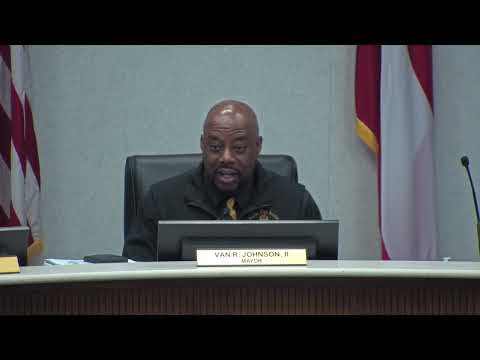
Criminalization and enforcement In response to a council question about enforcement during St. Patrick’s Day weekend, the mayor said the city will not criminalize homelessness and that enforcement will focus on criminal behavior rather than on a person's housing status. Officials reiterated that outreach teams are expanding hours to engage and offer services rather than to criminalize being in public spaces.
What’s next City staff and the ICH plan further outreach to stakeholders and neighborhood leaders and will return to council with the strategic plan and any related ordinances or resolutions for formal consideration.