Get Full Government Meeting Transcripts, Videos, & Alerts Forever!
Get email alerts on the Historic Preservation topic
No spam. Unsubscribe anytime.
Bayonne council adopts redevelopment plan for Uptown synagogue site after public pleas to preserve building
Summary
The Bayonne Municipal Council voted Feb. 19 to adopt a redevelopment plan for property at 1012–1022 Avenue C after public testimony urging preservation of the historic Uptown Synagogue. A council member voted against final passage, citing lack of pre-meeting consultation with city staff.
The Bayonne Municipal Council on Feb. 19 adopted a redevelopment plan for property at 1012–1022 Avenue C (identified in the meeting materials as Block 6064, Lots 2 and 3), moving the application forward after a public hearing in which a longtime resident urged the city to preserve the building now referred to by speakers as the Uptown Synagogue.
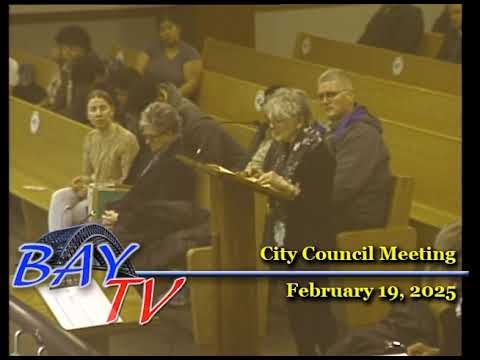
The testimony that drew the most attention came from Renee Shero O'Leary, who said she grew up in Bayonne and described the building's role in the city's Jewish community. She told the council the original sanctuary was constructed in 1915 with a school built in 1928 and urged the council to consider options other than demolition, including adaptive reuse or at minimum a plaque to mark the site's history. "I came from Manhattan today to ask you to honor this piece of rich history of Bayonne," O'Leary said during the public comment period.
The council president and other members acknowledged O'Leary's remarks and said the typical process for development of this sort runs through the planning board first; planning staff will forward recommendations to the council and the council retains final authority. Director Skillen (city staff) indicated a plaque or similar recognition could be included in the planning report or site plan review; the council president said he would look into possible historic signage or a street-name plaque but did not promise a specific outcome.
Councilmember Edward Carroll was the only member to vote against final passage. Carroll said he had asked the director to speak with him about this and other agenda items and had not been contacted in the intervening 30 days, and he said he could not in good conscience vote in favor. He also praised O'Leary's testimony: "Miss O'Leary, you spoke so eloquently, and delivered your comments so well," Carroll said before announcing his "no" vote.
Other speakers during the public comment period urged preservation or suggested outreach to potential institutional buyers; Edward Grimes, representing a disability-rights group, suggested contacting an organization called Liquid Church as one possible alternative steward for the property.
The ordinance was introduced at the Jan. 22 meeting and returned for final passage after the Feb. 19 public hearing. Councilmember Booker moved the resolution giving the ordinance second reading and Councilmember Perez seconded. The roll call on final adoption was Booker: Aye; Carroll: No; Perez: Aye; LaPalouse: Aye. The ordinance passed.
What happens next: the matter will proceed through the usual planning and site-plan review steps; the council president and planning staff said they will explore ways to memorialize the synagogue on the street or in the planning report. No formal preservation designation was reported during the Feb. 19 meeting; the council president said the planning board would be the first stop for any historic-status request.
Quotes in context
"I came from Manhattan today to ask you to honor this piece of rich history of Bayonne," — Renee Shero O'Leary, public commenter.
"I vote no. I asked at the last meeting for our director to speak with me about this and several other items on the agenda. I wasn't contacted in 30 days, so I don't think I should vote for it in good conscience," — Councilmember Edward Carroll.
Ending
The redevelopment plan’s adoption clears the way for the property owner’s project to move to planning review; council members and staff said they would explore a possible plaque or other memorialization to record the synagogue’s history but made no binding commitment to preserve the building as part of the redevelopment. A public hearing and site-plan review are the next procedural steps.