Get Full Government Meeting Transcripts, Videos, & Alerts Forever!
Get email alerts on the State Legislation topic
No spam. Unsubscribe anytime.
Wyoming Senate advances multiple bills on elections, wildfire liability, school finance and more; zoning protest dispute sends matter back to conference
Summary
The Wyoming Senate passed several House bills on Feb. 28, 2025, settled a major wildfire-management package and engaged in a prolonged dispute over a zoning-protest amendment that a rules committee deemed not germane. Lawmakers debated school funding, hospital-price transparency and other measures before adjourning.
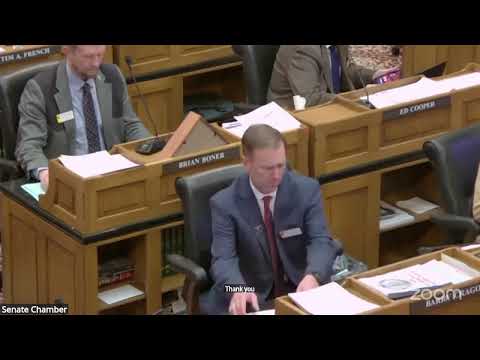
CHEYENNE — The Wyoming Senate on Feb. 28, 2025, approved a series of bills ranging from election rules to wildfire liability and school finance and debated several contentious items, while a dispute over a non-germane zoning-protest amendment sent that matter back to a joint conference committee.
The chamber approved multiple House bills on third reading, adopted amendments on some, and sent enrolled acts to the governor. Lawmakers spent substantial time on school-finance changes and education appropriations, took up wildfire-related legislation that includes loan and grant programs, and debated rules governing price-transparency for hospitals. A separate, heated floor fight over House-Senate differences on a zoning protest statute produced a unanimous rules finding that elements of the House amendment were not germane to the Senate bill and left the issue unresolved.
Why it matters: The measures passed this week affect how county election officials verify voters, how utilities are shielded or exposed to liability related to wildfires, and how the state funds schools — including a controversial supplemental for education costs and child-development center funding. The zoning-protest dispute could shape how local governments and developers handle land-use challenges and whether private protests can block zoning changes.
What the Senate did
- Election residency bill (House Bill 156): The Senate debated and rejected a third‑reading amendment that would have removed the secretary of state from a verification role and returned the lead to county clerks. Senator Cooper argued the change “puts the power back in the hands of the county clerk, where it belongs.” The amendment failed and the bill subsequently passed the Senate. (Transcript evidence: intro and final passage recorded.)
- Wildfire management and utility liability (House Bill 192 / Senate file incorporation): The Senate adopted an amendment that clarified the liability shield for utilities and added “gross negligence” language; sponsors said the change protects utility actions that conform to approved wildfire-management plans while leaving out-of-plan conduct open to suit. The amendment was adopted and the engrossed bill passed the Senate.
- School-finance recalibration and appropriations (House Bill 316): The chamber considered amendments to fully fund the ECA (educational cost adjustment) and debated related appropriations. Senators exchanged lengthy remarks about the risks of incremental spending, possible litigation, and the long-term effects of funding approaches. The Senate adopted a funding amendment (roll-call recorded) and later approved the bill.
- Wyoming Wednesday / legal holidays (House Bill 246): Senators adopted a committee amendment and passed the bill after brief floor remarks about the state’s traditions.
- Age‑verification for obscene websites (House Bill 43): The Senate approved a bill requiring covered platforms to use third‑party age‑verification methods and prohibiting retention of identifying information; the bill provides civil causes of action, statutory damages and exclusions for internet service providers.
- Other actions: The Senate signed several enrolled acts (including Senate Enrolled Act 61 / Senate File 103 and multiple House enrolled acts) and adopted a conference report on immunity for drug‑overdose reporting. It also rejected a motion to recede from non‑concurrence on Senate File 40 (zoning protest petition amendments), meaning a joint conference committee remains active on that file.
Procedural dispute: zoning protest petition
A notable floor fight concerned a House amendment to Senate File 40 that several senators argued was not germane to the original bill. Senator Higgs urged senators to “vote aye to receive from the senate position of non concurrent and protect private property rights,” while Senator Garew and others argued the House had inserted unrelated language late in conference committee work. The Senate chair ruled the House amendment not germane under Senate Rule 11‑6 and the Rules Committee sustained that ruling unanimously. The full Senate later voted not to recede from non‑concurrence, sending the matter back to a joint conference committee to continue negotiations.
Quotable
- “All we're doing is the secretary the county clerk is the 1 on the ground doing the work,” — Senator Cooper, urging rejection of an amendment that would have moved verification authority.
- “We've worked long and hard to make sure that the protections were out there,” — Senator Dockstader, in floor debate on wildfire liability language that utilities supported.
- “This is a difficult decision… If we support that at this point in time, that we believe we're going to do that,” — Senator Scott, speaking against full funding of a school-design appropriation without a binding construction appropriation (House Bill 316 debate).
Votes at a glance (selected items)
- House Bill 156 — Proof of voter residency/registration qualifications: Third reading amendment that would have removed the secretary of state from a verification role failed; the bill then passed the Senate (final passage announced on the floor). (Transcript roll-call and final passage recorded.)
- House Bill 192 — Public utilities; wildfire mitigation and liability limits: Third‑reading amendment adding "gross negligence" language and clarifying liability for actions inside vs. outside wildfire‑management plans adopted; engrossed bill adopted by the Senate (final passage announced on the floor).
- House Bill 246 — Wyoming Wednesday (legal time & holidays): Committee amendment adopted; bill passed the Senate (final passage announced on the floor).
- House Bill 316 — School finance recalibration and related appropriations: Multiple third‑reading amendments considered (including full funding of ECA and child‑development center appropriations); at least one appropriation amendment was adopted on roll call; final passage recorded on the floor.
- House Bill 43 — Age verification for websites with harmful material: Senate approved bill creating an age‑verification requirement for covered platforms, limits on retention of identifying information and civil remedies for violations.
- Senate File 40 — Zoning protest / protests and petitions: A House amendment added late in conference was ruled not germane under Senate Rule 11‑6 by the chair and Rules Committee; the Senate voted not to recede from non‑concurrence and the issue remains with a joint conference committee.
What to watch next
- Conference meetings on Senate File 40 are continuing; the measure’s outcome will determine the state-level rules for zoning-protest petitions and the balance between private property and local land‑use procedures.
- The governor’s desk: enrolled acts signed during the session will be monitored for implementation details by agencies (several bills were signed by the presiding officer on the floor and transmitted to the governor).
Meeting context and next steps
The Senate recessed and will reconvene for the next floor day; multiple joint conference committees remain active to resolve House‑Senate differences. Several passed measures involve appropriations or program changes that state agencies and counties will implement over the coming months.
Sources and evidence
This article is based solely on the February 28, 2025 Wyoming Senate floor transcript and roll‑call statements from that session. Excerpts and vote tallies quoted are verbatim from the transcript of the proceeding.